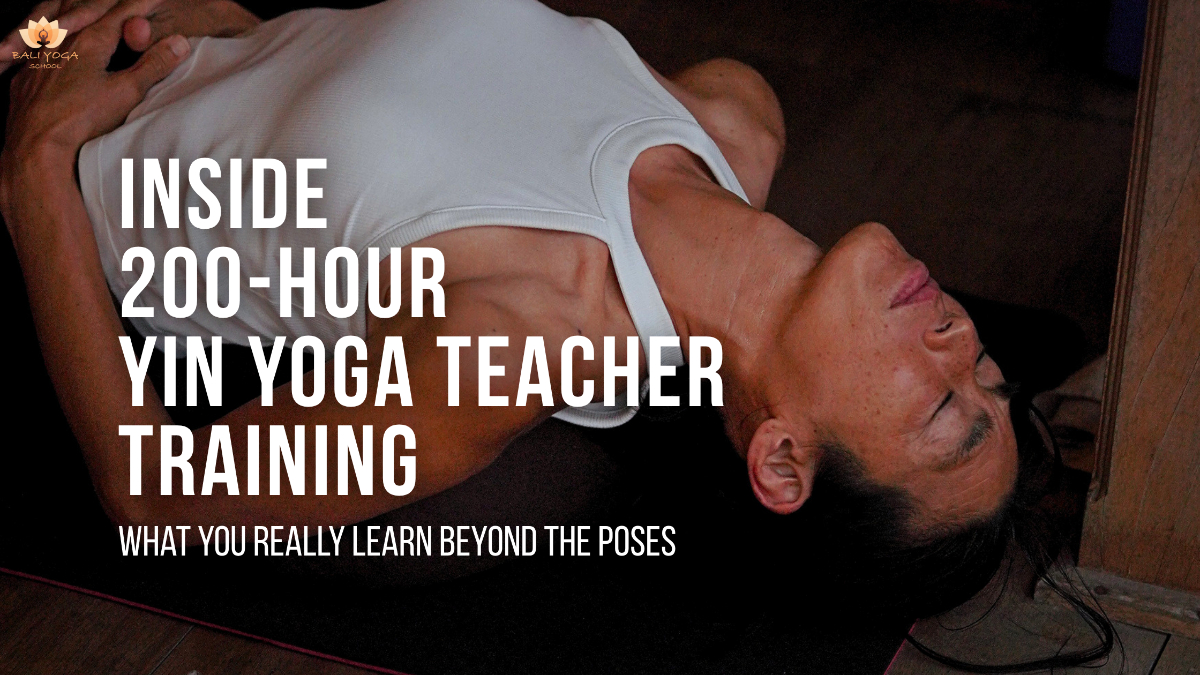
What You Learn in a 200-Hour Yin Yoga Teacher Training in Bali
YIN : A New Dawn for Yogic Traditions
A 200-hour Yin yoga teacher training goes far beyond learning long-held poses. Students study functional anatomy, fascia, skeletal variation, Yin–Yang philosophy, Traditional Chinese Medicine, meridian theory, safe sequencing, prop use, contraindications and teaching methodology. The training helps future teachers understand why a posture is selected, which area it targets and how it should be adapted for different bodies. If you want to know more abotu our yin yoga course dates and curriculam or you want to join our yin yoga teacher training course in bali visit the course page for all details.
Facts at Glance about Yin Yoga
- Emerged in 1970’s as an experiment by Asian movement practitioners of the United States
- Brings principles of Classical Hatha Yoga, Martial Arts and Traditional Chinese Medicine
- Focused on Connective tissues beyond the muscles
- Is Slow, deep and encourages hydration of cell
- Releases trapped fluid and stored emotions from the body
 Understanding Yin Yoga teacher training curriculum (Detailed )
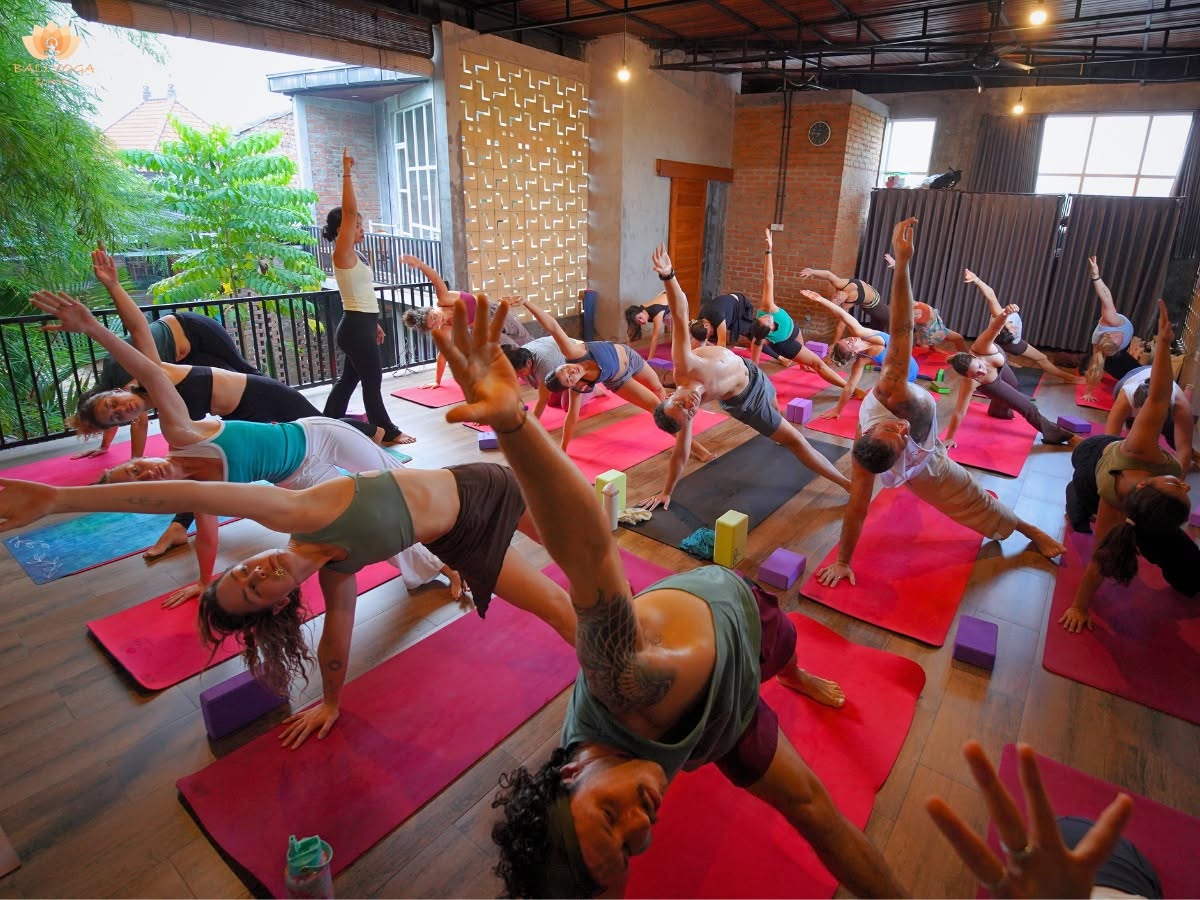
The Yin yoga teaching curriculum spans from one week to 200 hrs intensive immersion typically including subjects like Yin & Yang yoga asanas, Traditional Chinese Medicine Philosophy, Anatomy, Alignment workshops and Meditation. Yin yoga teacher training syllabus is extended through live classroom sessions, coursebooks or manuals along with documentaries, case studies and audio visual resources.
Yin Yoga Anatomy
Detailed study of the Spine and the Hip joint along with deeper understanding of Joints and Connective tissues. Fascia- A connective tissue deeper in the layers of the skin improves cellular function, reception and repair. The focus of Yin yoga is to bring about gentle stimulation for fascia and hydrating the connective tissues. Functional anatomy for yin yoga helps students understand systemic anatomical effects of practice and engagement of smaller joints and muscles.
A Yin Yoga Teacher needs a deeper understanding of :
• Skeletal variation
• Functional anatomy
• Joint structure
• Range of motion
• Fascia and connective tissue
• Spine and pelvis
• Hips
• Knees
• Shoulders
• Individual proportions
• Tension vs compression
• Appropriate use of props
• Modifications
Yin Yoga Teaching Methodology
In Teaching methodology participants learn how to identify different anatomical variations and personalise classroom experience while delivering through the principles of the practice. Learning Yin Yoga sequencing based on the yin principles of Surrender, Edge, Stillness.
In a full immersion such as a 200 HRS TTC course, the use of props, response mechanism for emotional release, teaching ethics and creating the environment for a safe practice and inclusivity.
At Bali Yoga School, Students are encouraged to adopt a teacher’s perspective. A student is trained to question the practice on below lines:
Why this pose?
Why now?
What area are we targeting?
What came before it?
What comes after it?
What modification will different students need?
This adds a lot of value to their teaching practice.
Philosophy of TCM and Yin Yoga
The Philosophy of TCM includes a basic understanding of Yoga Philosophy, Daoist Philosophy, the principles of conducting life inspired from Buddhism, the ancient therapeutic practices such Tai – Chi, Qi-Gong, Accupressure, Accupuncture, Gua Sha, Herbal Medicine, Tui -Na Massage and More.
Do we need a 200Hrs TTC course for learning Yin Yoga?
What Makes a 200-Hour Yin Yoga Teacher Training Different from a Regular YTT?
Let us begin with understanding the diversity between Yin & Yang Practices.
Yin Practice:
• Holding Time : Longer-held postures (05-15 mins)
• Use of Gravity: Mostly floor-based practice
• Range of Motion : Greater use of bolsters, blocks and blankets
• Pace: Slow for stillness and observation
• Intention: Functional rather than aesthetic approach
• Body Acceptance: Individual anatomical differences
• Alignment: Mindfulness and breath awareness
Yang Practices:
• Intention: More muscular engagement
• Pace: Dynamic movement
• Time: Shorter holds
• Alignment: Strength and active mobility
• Pace: Continuous transitions
Bali Yoga School includes one of a kind Yin Yoga Teacher’s Training Course where both Yin Yoga practice and Yang Yoga practice are a part of the curriculum during the course.
This thoughtfully curated course observes that understanding Yin becomes easier when students also understand its relationship with Yang.
The future Yin Yoga teacher needs to understand that the different people will receive the practice differently and it is important to experience Yin as priority practice, not as a short course to help students evolve from the idea of aesthetics attached to the asana practice. For this, one must take up 500 Hrs Yin Yoga TTC course and help others transition.
 Functional Anatomy, Fascia & Skeletal Variation: Why Every Body Experiences Yin Differently?
In Yang Practices, the mind is outward on the visibility of wearing the posture on the body. The idea of ideal posture and perfection dissolves and the habit to observe the posture inward develops gradually with the practice of Yin Yoga.
Explain that good Yin teaching should not be based on forcing every student into exactly the same shape. Yin Yoga emphasizes Safe-Positioning as you connect within the body with the fascia in the peak pose.
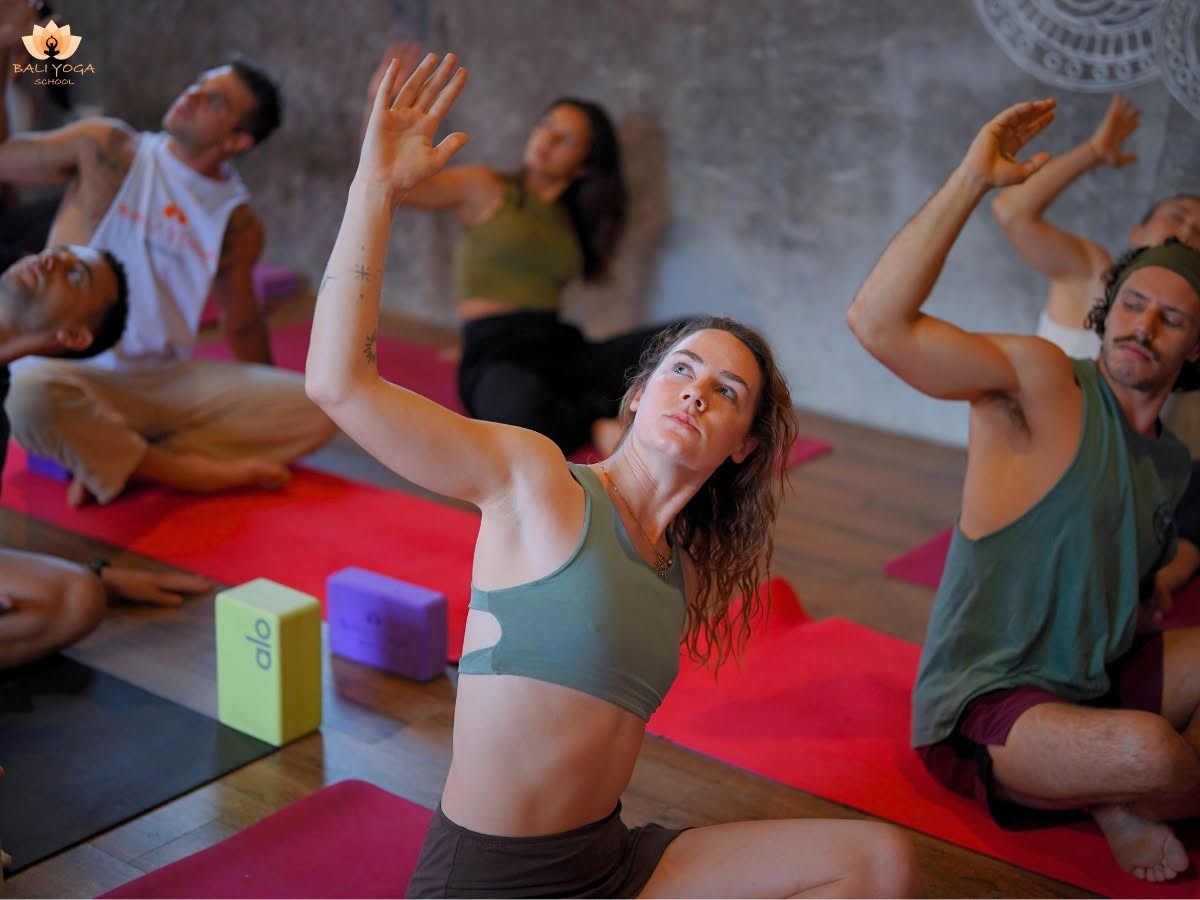
Two students can perform the same Yin posture correctly while looking completely different. A teacher therefore needs to understand whether a student’s limitation comes from: Muscular/tissue tension or from their individual skeletal structure and compression.
Yin-Yang Philosophy, Traditional Chinese Medicine & Meridian Theory
In the East, a steady observation of how the Sun and Moon support and influence life on earth gave rise to deep contemplation and development of natural philosophy and naturalism. Whether it is Ha-Tha (Yoga) , Purusha – Prakriti (Samkhya), Yin-Yang (Daoism) , different schools of thought have long acknowledged the balance of these two vital forces.
Yin & Yang in daoism are dual forces that complement each other and they are born from or are the manifestation of the vital life force called the ‘chi’. In the Chinese Traditions and belief systems the nature of duality has been widely studied to understand its effect on the body and on the mind. The Yin Yoga TTC at Bali Yoga School connects Yin Yoga with Yin-Yang philosophy and Traditional Chinese Medicine. It introduces stillness as a conscious choice beyond sleeping to manage productivity and resilience at the body and mind level. Taoist movements like Tai Chi and Qi Gong are replaced with Classical Hatha Yoga Asanas in Yin Yoga but the philosophy of Stillness and Surrender in Daoism dominates the practice and makes it meditative.
Traditional Chinese Medicine believes that the Chi flows through energetic pathways called as meridians and excess of deficiency of any of the five elements from wood metal fire water earth , that correspond to each of the body organs causes subtle shifts in the flow of chi and if not supported by the body, it causes blockages in the meridian pathways.
A Yin Yoga Teacher must understand that TCM & Daoism Philosophy is very important to explain physical illness and equally important is anatomy to explain treatment through yin postures. A Yin teacher may use meridian-based themes when planning classes and conduct mindfulness and meditation practices from Daoism during long-held postures.
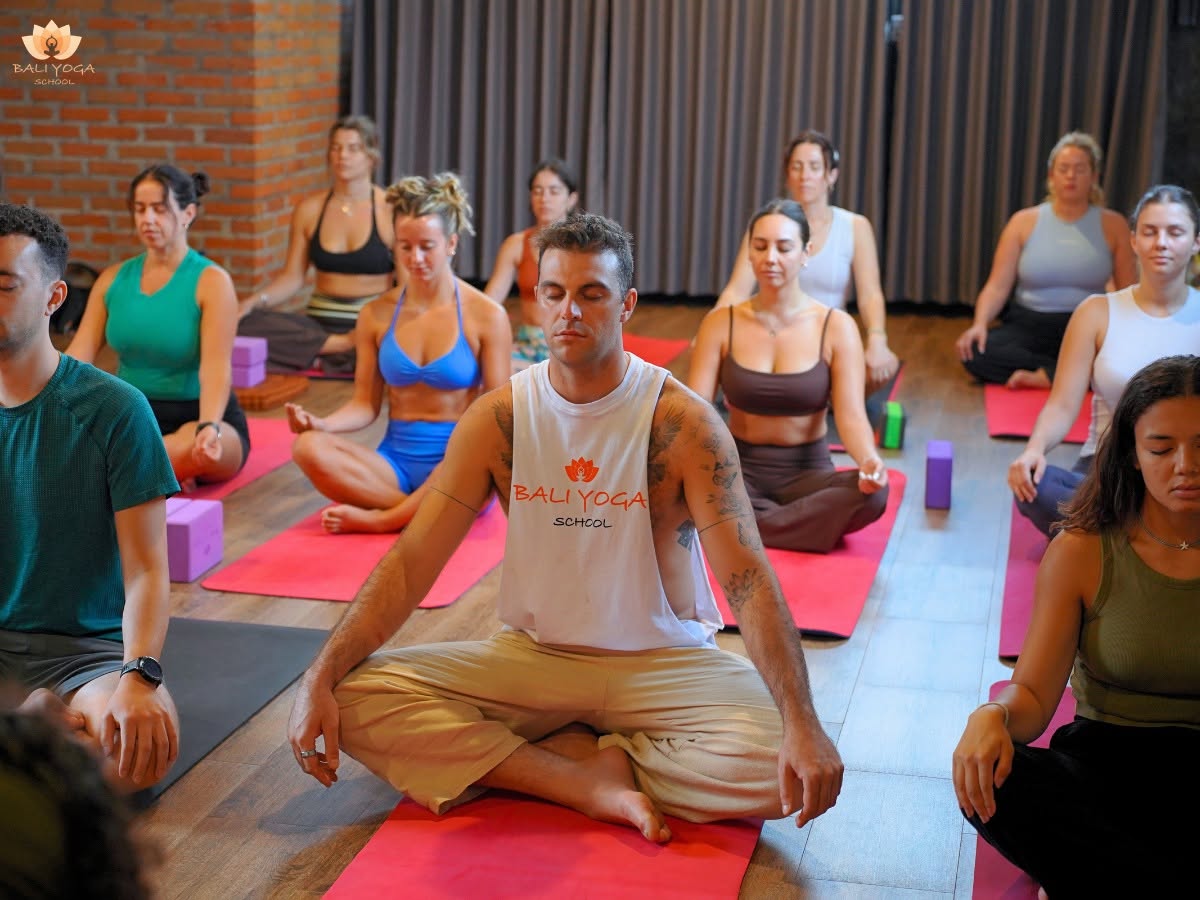 The Need to Build and Teach a Safe Yin Yoga Class
Deeper postures may give deeper injuries if practised unsupervised. The Anatomical understanding of the teacher and knowledge of skeletal variations helps conduct a Safe Yin Yoga class.
At Bali Yoga School , A Yin Yoga Teacher Training Course curriculum covers safety aspects by separating preparatory poses and peak poses. Some Basic Class sequencing elements include :
• Setting safety intention for the class
• Selecting appropriate poses
• Understanding target areas
• Pose order (Easy to Difficult)
• Hold duration (Varies Beginner to Intermediate Practioner)
• Neutral/rebound poses
• Transitions
• Counterposes
• Breath awareness
• Meditation
• Modifications
• Student observation
• Verbal cueing
• Contraindications
• Class timing
• Savasana
Teach Yin Yoga with Confidence at Bali Yoga School
At Bali Yoga School Yin Yoga Practitioners are invited to level up their understanding and take on promotion to a Yin Yoga Teacher through Yin Yoga 200 Hrs and 300 Hrs TTC Courses spanning across fifteen days to two months! It’s time we step away from our Yang Lifestyle and embrace the calm within us , waiting to meet. Make the best of eastern sciences available to us..
Ready to Surrender?… What Say?