

I Gusti Ngurah Rai: Bali’s National Hero & His Legacy

When you visit Bali, you will discover that the international airport of this island has a special name. It honors the memory of I Gusti Ngurah Rai, a brave warrior who gave his life in the name of freedom of Indonesia. His story is the personification of heroism, sacrifice and undefeatable spirit of Balinese people. Even today, his work and sacrifice still has an impact on yoga students and other tourists who wish to learn about the rich history of Bali.

Childhood of a Future Hero

Gusti Ngurah Rai was born on 30 January 1917, in Denpasar, Bali. The nation was a Dutch colony at this time. He was raised in a difficult setting. Under foreign control, young Ngurah Rai saw the brutality and suffering inflicted upon those who were powerless. This experience made the seeds of independence grow in his heart.

His family was educated and thus they sent him to Java to study. There, he pursued law in a good school and also encountered other young Indonesians who had the same dreams of freedom as he did. It is these early years that developed his idea of justice and liberty. His future leadership was built upon a strong base of the fusion of traditional Balinese values and modern education.

Ngurah Rai was a natural leader and he finished his military training in 1942. He was tactical and physically brave. His visit back to Bali brought a new dawn in the resistance movement of the island.

 

Fighting for Freedom

In 1945, Indonesia became independent of colonial rule after World War II came to an end. The Dutch forces however desired to recapture their previous colonies. They went back to Indonesia with military force trying to reclaim the archipelago. Bali was one of the arenas on this freedom fight.

Ngurah Rai formed and headed the Pesindo Battalion which was composed of young Indonesian soldiers. He did not only teach these men how to fight but also taught them the principles of dignity and honor. His leadership approach was military discipline mixed with strong respect to Balinese cultural ways. The battalion has turned out to be an icon of organized opposition against colonial powers.

With the situation developing, Ngurah Rai and his men were put in an impossible position. The Dutch military possessed more resources and more numbers and had better weapons. Even under such great odds, the young commander did not give in. He knew that there are certain principles that should be fought until the end, no matter what the consequences.

The Holy Idea of Puputan

You will have to know about one of the deepest Balinese traditions, puputan, so that you can know why Ngurah Rai made this last choice. This is a Balinese word that translates to finish or to end. Nevertheless, it is not that simple a translation. Puputan translates to fighting to the last drop of blood instead of the shame of a surrender.

This idea echoes the Balinese culture of the worldview in which honor and freedom are very important. Balinese warriors chose to engage in puputan when they had impossible odds, which is the Balinese history. They believed that they would rather die and face death with honor instead of living with shame. Such a practice is very related to the Balinese spirituality and culture.

To yoga practitioners who visit Bali, knowledge of puputan provides an understanding of the spirituality of the island. It reveals the way the Balinese people manage to reconcile between their quiet everyday life and the aggressive safeguarding of their principles. The same balance is reflected in the Balinese yoga philosophy, whereby soft practice is accompanied by the inner power.

The Battle of Margarana

The date Nov 20 1946 was one of the most crucial events in Bali history. Ngurah Rai and his 96 men went to war at Margarana in Tabanan. The Dutch army was overwhelming them and they had better firepower. It was no secret that victory was hardly possible.

However, Ngurah Rai decided to go into open war instead of retreating. This choice was in the spirit of puputan. The struggle was intense yet short. At the end, Ngurah Rai and his entire men had lost their lives in the quest to gain independence. Not even one soldier escaped.

They lost the battle but gained in the process something much bigger. The struggle of Margarana showed how Balinese believed in freedom. It showed the world that the Indonesian independence movement cannot be taken lightly. The Dutch soldiers could have conquered the land, but it could have never broken the Balinese spirit.
 

His Living Legacy

Ngurah Rai was declared a National Hero in Indonesia in 1975. But titles are only a part of what he left a difference in Bali. His legacy can be found all over the island.

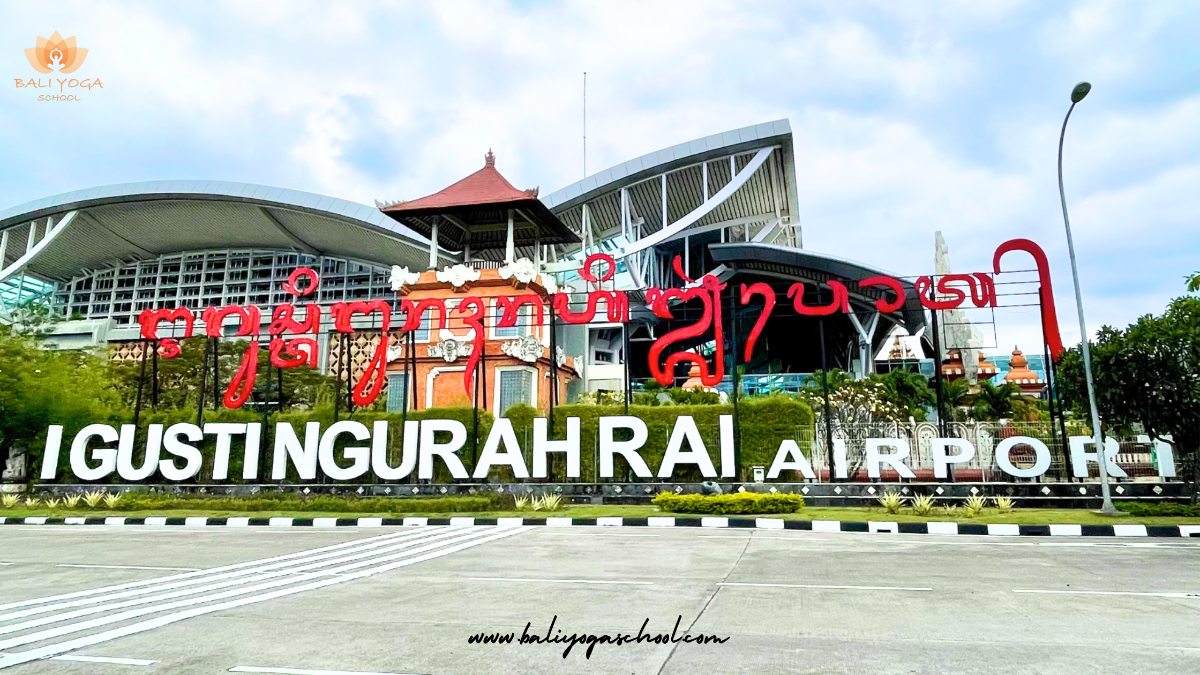
His name is the name of the international airport which is visited by millions of people annually. He is remembered in schools, the streets and monuments throughout Bali. There is a gorgeous monument at Margarana upon which the battle was fought. A number of Balinese visit this in order to honor and remember the sacrifice.

Ngurah Rai’s story is an excellent teaching to yoga students in Bali. The yogic principle of courage (abhaya), discipline (tapas), and selfless service (seva) is proved in his life. He showed how it is greatness itself that makes one be dedicated to something beyond oneself. True yoga practice has the same values.

Inspiration of the Modern Times

Ngurah Rai heritage is a kind of heritage that not only leads the people of Bali but also leads the visitors. His story teaches us that we must make sacrifices in a bid to be free and that we must uphold cultural identity. His example remains topical in the modern world where globalization is inclined towards extinction of the local culture.

The existence of such heroes as Ngurah Rai made Balinese people keep their own culture. The distinctive spirit of Bali is found in their adherence to traditions and their tolerance to the world. This balance attracts yoga practitioners and religious pursuers all over the world.

You practice yoga in the Bali living legacy. The peaceful existence on the island is present because of the work of brave individuals who had given their lives to protect the island. This understanding of this history will make you more attached to Bali and contribute to your yoga experience. The energy and will to conquer Ngurah Rai has continued to inspire the entire population that visits this magical island.

Ubud · Bali, Indonesia

Yoga Teacher Training Courses in Ubud

Explore our 100, 200, 300 and 500-hour yoga teacher training courses at Bali Yoga School.

Ubud · Bali, Indonesia

Yin Yoga Teacher Training Courses in Ubud

Discover our Yin Yoga teacher training options and explore course details, dates and fees.

Uluwatu · Bali, Indonesia

Yoga Teacher Training Courses in Uluwatu

Explore our 100, 200, 300 and 500-hour yoga teacher training courses in Uluwatu.

Himalayan Yoga Ashram · Rishikesh, India

Yoga Teacher Training Courses in Rishikesh

Explore yoga teacher training options at Himalayan Yoga Ashram in Rishikesh, India.

Bali Yoga School · Indonesia

Sound Healing & Reiki Courses in Bali

Explore combined Level 1, 2 and 3 training options in sound healing and Reiki.

Important Policy

Course Reschedule Terms & Conditions

Each student is eligible for one course reschedule only. Once the course has been rescheduled, no further changes to the course dates will be permitted.

Code of Conduct

Please read carefully. By attending, you agree to the following guidelines.

  1. Smoking and consumption of alcohol are strictly prohibited on the school premises.
  2. Gambling of any kind or unlawful behavior is strictly prohibited.
  3. Prohibited articles, inflammable articles, banned articles, drugs, or commercial goods are not allowed on the school premises or in the accommodation provided.
  4. Students must take good care of their own belongings. The management will not hold responsibility for any losses or damages incurred.
  5. In case of violation of the above regulations or any misconduct, or if deemed to cause others inconvenience or discomfort, the management reserves the right to terminate the studentship with immediate effect, and may ask the student to leave without a refund of money.
  6. If you wish to pay the remaining of the course fee by cash, please bring the bank notes that meet the following standard.
  7. Crisp & Untorn: A new bill must be free from any tears, holes, or fraying edges.
  8. Clean Surface: No stains, dirt, oil marks, ink smudges, or discoloration. The paper must retain its original brightness.
  9. Firm Texture: Notes should be firm to the touch, not limp, creased, or folded.
  10. Sharp Print & Security Features: The design, ink, micro-text, and color-shifting features must remain intact and clearly visible.
  11. No Writing or Defacement: Bills with pen marks, stamps, or graffiti are considered “unfit” for circulation.
  12. If you are bringing U.S dolors, it must be the new version (not the white background notes).
Read all remaining guidelines Show fewer guidelines
  1. Eggs are not included in the yogic diet; therefore, we do not permit their use or consumption in the school premises.
  2. Once a fee is paid, it is non-refundable. Only in the case of an emergency, a student may reschedule the date one time.
  3. Unwanted deliberate touching of other participants, hugging, kissing, or rubbing oneself sexually around another person • leaning over, cornering, or pinching • giving an unwanted massage • sexually oriented Asana • promising enlightenment or special teachings or status in exchange for sexual favors • attempted sexual assault are offensive crimes that include heavy fines and imprisonment; therefore, these must not be practiced on the campus. Only the individual will be held accountable for such actions.
  4. I am aware of and agree to the Code of Conduct. I will follow it with honesty and take full accountability for my actions.
  5. If you have any food allergies or any type of injury, please make sure to inform us in advance.
  6. Carry a personal medical kit including any prescription medicines, as brands and availability may differ.
  7. Purchase travel medical insurance that covers emergencies and evacuation.
  8. For hygiene purposes, we recommend that all students bring their own towel.
  9. On the premises, we provide bedsheets and yoga mats, but we suggest students bring their own if they prefer not to use the school’s for hygiene reasons.
  10. We provide the course manual in PDF format instead of a hard copy, and here’s why: Supporting Nature – Access Your Subject Materials Digitally.
  11. If any type of weapon is found in your possession on the school premises, you will be immediately expelled and fined USD 2,000.
  12. Class attendance is mandatory except for reasons of illness. Students who need to skip any class must inform the management beforehand.
  13. Drinks and food are strictly prohibited in the yoga halls; however, water bottles are accepted.
  14. No student will be allowed to enter the hall once the class starts.
  15. Students are not allowed to enter other course classes.
  16. Activity participation – All students’ participation is mandatory for any indoor and outdoor activities conducted by the school.
  17. We ask you to be mindful of your surroundings. The yoga halls represent a space of clarity. Please do not leave your belongings after any class.
  18. Keep the school premises clean. No articles are to be pinned or stuck on the walls.
  19. Entry gate – Open from 5:00 AM to 10:00 PM. We lock the door at 10:00 PM.
  20. Room electricity should be turned OFF when you are out of the room.
  21. Students are responsible for any damages caused to the furniture, decorations, fittings, wall paint, or other facilities inside the room.
  22. Students will be served three meals a day (breakfast, lunch, and dinner).
  23. Do not take any room items as souvenirs. Otherwise, they will be billed to your account with an additional fine of USD 500.
  24. Courses are conducted according to the syllabus mentioned on the school website.
  25. You are allowed to eat outside. However, the kitchen staff needs at least 6 hours’ notice ahead of each meal in order to avoid food wastage.
  26. In order to serve you, we need our cutlery, dishes, and glasses in the dining area. These items are not allowed to be taken to or kept in students’ rooms.
  27. If you have any issues or concerns with your physical or mental health, please inform one of the instructors or the admin.
  28. In case of violation of the above regulations or any misconduct, deemed to cause others inconvenience or discomfort, the management reserves the right to terminate the studentship with immediate effect.
  29. Mats and props need to be taken out and put back in their original places by the students after each class.
  30. Students need to make their own notes.
  31. The management reserves the right to alter or amend the above regulations without any notice.
  32. The school is not responsible for any activity outside the school’s scope, e.g., visa extension, scooter rental, or incidents involving students.
  33. During classes and excursions, photos may be taken for advertisement purposes.
Yogi Himanshu teaching yoga in Bali at Bali Yoga School

Legal & Brand Protection Notice

Bali Yoga School® Intellectual Property Is Strictly Protected

Unauthorized copying, reproduction, commercial use, impersonation, misleading use of the Bali Yoga School® name, misuse of photographs, videos, course materials, logos, trademarks, domains, certificates or other protected content is strictly prohibited except where expressly permitted by applicable law or authorized in writing. Bali Yoga School® reserves the right to pursue takedowns, trademark complaints, copyright claims, domain disputes, injunctions, damages and other lawful remedies against unauthorized use.

Trademark & IP Policy

All rights reserved. Use of Bali Yoga School® content or identity does not create any right, licence, affiliation, authorization or ownership.