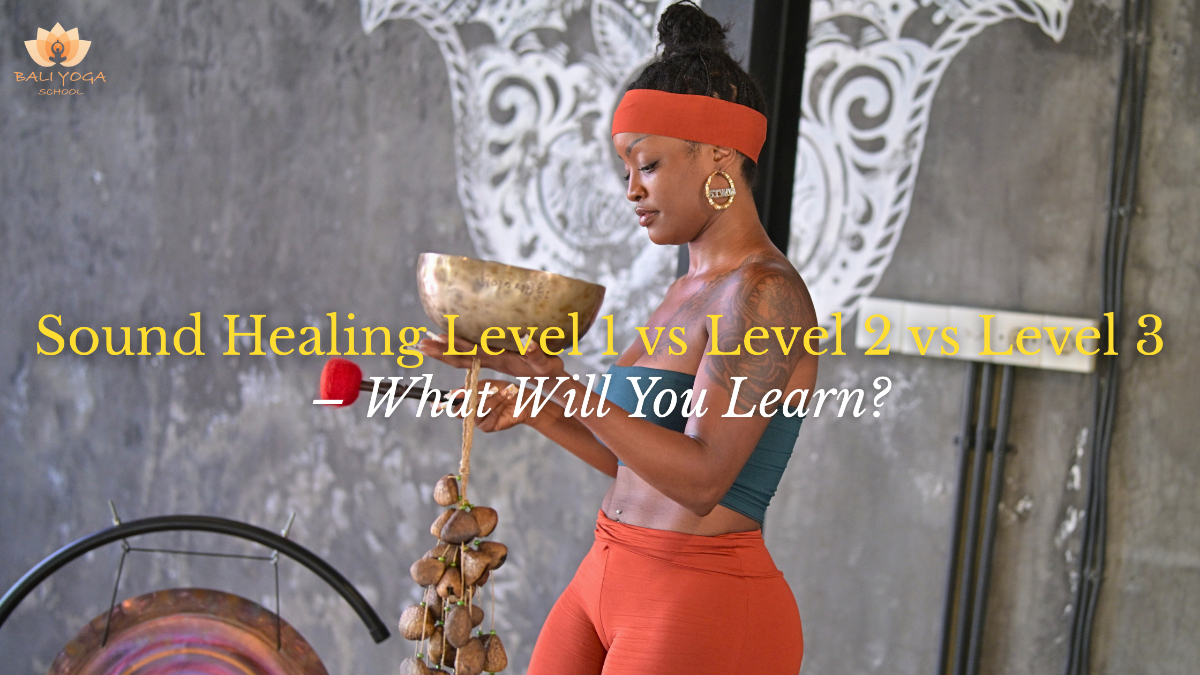
Sound Healing Level 1 vs Level 2 vs Level 3 – What Will You Learn?
Sound healing has become an important area of interest for yoga practitioners, meditation teachers, wellness professionals, and people exploring traditional approaches to relaxation and self-awareness.
Among the instruments used in sound healing, Tibetan singing bowls are particularly associated with Himalayan sound traditions. Their resonant tones and vibrations are used in meditation, sound baths, and various wellness practices.
For students interested in professional sound healing training, understanding the difference between Sound Healing Level 1, Level 2, and Level 3 is an important first step.
At Bali Yoga School in Ubud, Bali, Indonesia, we offer structured sound healing courses that combine theoretical lessons with hands-on practice.
Each training level introduces different techniques and applications. Level 1 establishes the fundamentals of Tibetan singing bowls, Level 2 focuses on chakra-related practices and more detailed applications, and Level 3 introduces sound bath facilitation, additional instruments, and advanced practical techniques.
This guide explains what students learn at each level, what scientific research currently tells us about singing bowls, and how to choose a course based on personal interests and experience.
 What Is Sound Healing?
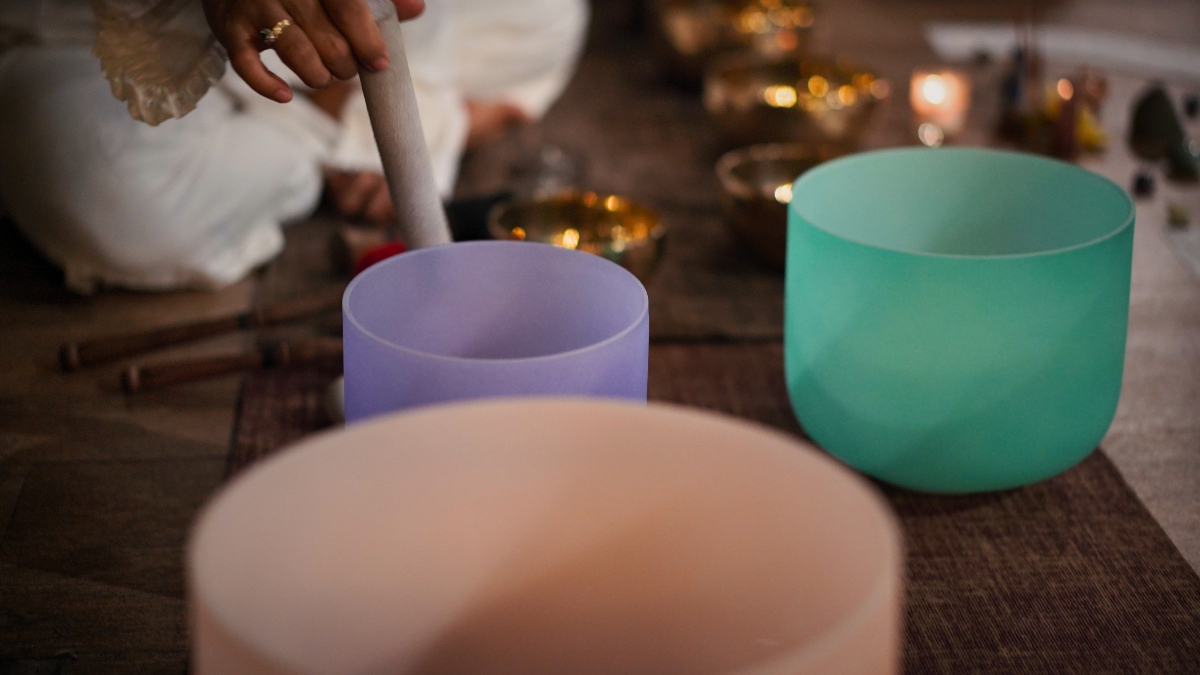
Sound healing is a wellness practice that uses sound-producing instruments, vocal sounds, and vibrations during relaxation, meditation, or structured sessions.
Instruments commonly associated with sound healing include Tibetan singing bowls, gongs, ocean drums, rain sticks, chimes, and other resonant instruments.
Different instruments produce different sounds depending on their size, material, construction, and playing technique. For example, striking a singing bowl produces a resonant tone, while rubbing its rim with a mallet can create a more sustained sound.
Within traditional sound healing practices, these sounds may be incorporated into meditation, relaxation, and energy-based wellness systems.
At Bali Yoga School, students learn both practical instrument techniques and the traditional concepts associated with sound healing.
Our curriculum also introduces subjects such as sound frequencies, chakra theory, aura practices, and structured sound bath sessions.
Students interested in understanding the available learning pathways can explore our Sound Healing Courses in Bali, covering introductory and advanced training.
It is important to distinguish traditional wellness concepts from established medical treatments. Sound healing should not be considered a substitute for professional healthcare.
What Does Scientific Research Say About Singing Bowls?
Scientific interest in singing bowls has increased, particularly in relation to relaxation, emotional well-being, and meditation.
A 2025 systematic review published in Integrative Medicine Research examined 19 clinical studies from eight countries, including nine randomized controlled trials, involving singing bowl interventions.
The researchers identified potential benefits for anxiety, mood, sleep, and certain aspects of well-being. However, they also noted limitations in the available research, including concerns about study quality and differences in research methods.
The findings are promising but do not establish singing bowls as a proven treatment for medical or psychological conditions.
Read the research: Therapeutic Effects of Singing Bowls – Systematic Review (2025), PubMed Central.
An earlier observational study published in 2017 involved 62 adults who participated in singing bowl sound meditation. Participants reported lower levels of tension, anger, fatigue, and depressed mood after the session. Because the study did not include a control group, it could not establish that singing bowls alone caused these improvements.
Source: Effects of Singing Bowl Sound Meditation on Mood, Tension, and Well-being – PubMed.
The US National Center for Complementary and Integrative Health (NCCIH) also explains that music-based interventions may support certain aspects of health and well-being, although the evidence differs between interventions and medical conditions. Research on music in general should not automatically be interpreted as proof of specific singing bowl practices.
These findings provide useful background for students studying sound healing while reinforcing the importance of responsible, evidence-aware practice.
 Sound Healing Level 1: Building a Strong Foundation
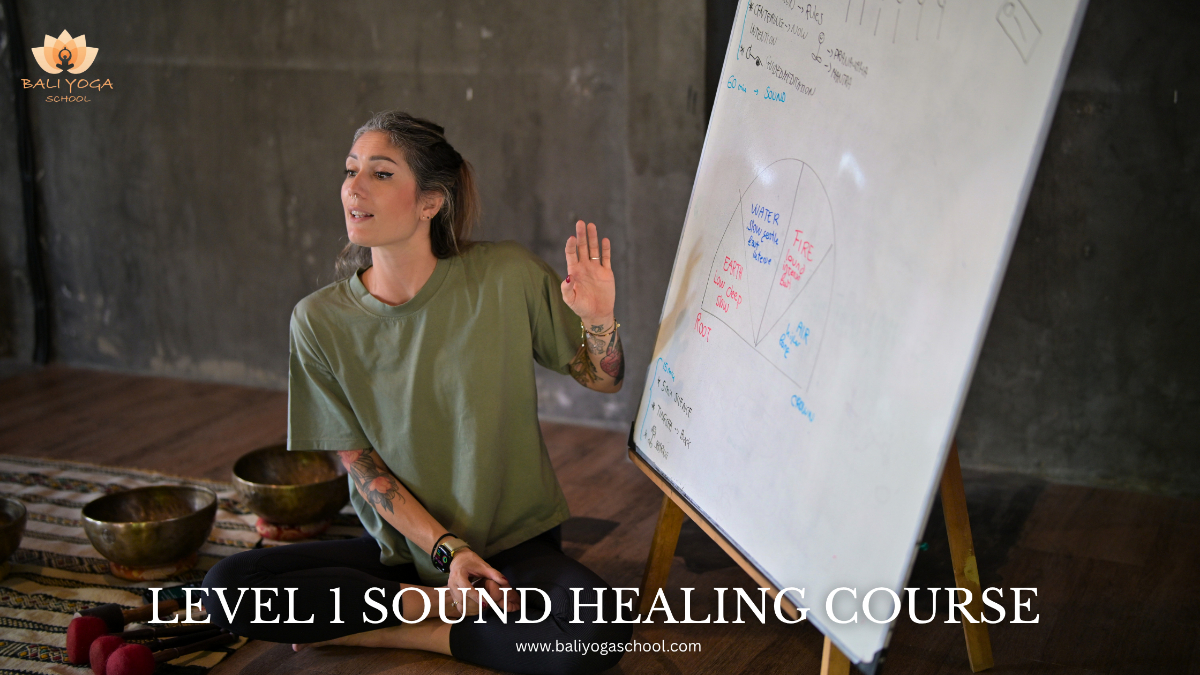
Sound Healing Level 1 in Bali introduces students to Tibetan singing bowls and the essential techniques used in traditional sound healing.
This foundational course is suitable for people who are new to singing bowls, yoga practitioners, meditation enthusiasts, and wellness professionals interested in learning the basics.
What Will You Learn in Level 1?
1. Introduction to Tibetan Sound Healing
Students begin by learning about Tibetan sound healing therapy, its traditional background, and its applications within wellness practices.
2. Types of Tibetan Singing Bowls
The course introduces different types of singing bowls and the factors to consider when selecting instruments for personal practice or sound healing sessions.
3. Correct Playing Techniques
Practical sessions cover how to hold singing bowls and produce sounds through rubbing and striking techniques.
These skills help students become familiar with the instruments, control the sound they produce, and understand the differences between playing methods.
4. Aura Cleansing and Protection Concepts
Students are introduced to the traditional concept of the aura, including practices described in the syllabus as aura cleansing, sealing, and self-protection.
These practices belong to traditional energy-based wellness systems and are not scientifically established methods of detecting or changing a measurable human energy field.
5. Mind Relaxation Techniques
The course introduces the use of singing bowls in structured relaxation practices.
Students learn how sound can be incorporated into personal meditation or guided relaxation sessions.
6. Traditional Therapy Applications
Level 1 includes traditional sound healing approaches associated with the digestive system and other wellness applications.
These techniques are studied as part of the school’s traditional curriculum rather than as medically validated treatments for digestive disorders.
7. Water Charging Techniques
Students explore the traditional concept of water charging using singing bowl vibrations.
This is presented as a cultural and wellness practice, not as a scientifically established method of improving drinking water’s health properties.
8. Professional Session Preparation and Safety
The syllabus covers how to facilitate a sound healing session and introduces important safety rules for conducting practice.
Learning to handle instruments correctly, maintain appropriate sound levels, and respect participant comfort is an essential part of responsible facilitation.
Who Should Choose Level 1?
Level 1 is a suitable starting point for complete beginners and those who want to understand how Tibetan singing bowls are selected, held, played, and used in introductory sound healing sessions.
It also provides an introduction for yoga teachers who want to incorporate singing bowl sounds into meditation or relaxation classes.
The main purpose of Level 1 is to develop confidence with the instrument before moving into more specialised practices.
Students who want to continue directly into chakra-related training can also explore the Level 1 & 2 Sound Healing Course in Bali.
Sound Healing Level 2: Chakra Balancing and Advanced Applications
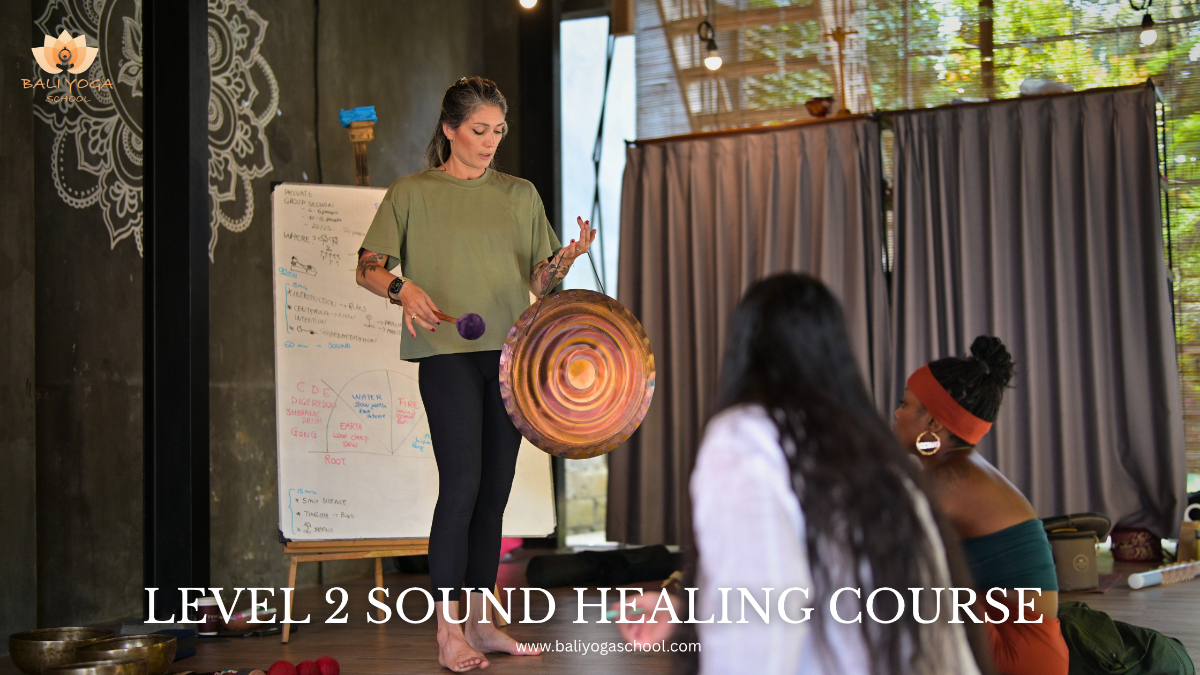
Sound Healing Level 2 in Bali expands the subject beyond basic singing bowl techniques.
The published Level 2 syllabus focuses on chakras, identifying perceived energy imbalances, space cleansing, and traditional mental and physical wellness applications.
Students also explore how sound may be incorporated into more detailed meditation and individual session formats.
What Will You Learn in Level 2?
1. Detailed Introduction to Chakras
Students study the traditional seven-chakra system and its significance within yogic and energy-based practices.
The seven chakras are traditionally described as:
- Root Chakra (Muladhara)
- Sacral Chakra (Svadhisthana)
- Solar Plexus Chakra (Manipura)
- Heart Chakra (Anahata)
- Throat Chakra (Vishuddha)
- Third Eye Chakra (Ajna)
- Crown Chakra (Sahasrara)
These represent a traditional yogic framework rather than medically established anatomical structures.
2. Identifying and Clearing Blocked Chakras
Training introduces traditional methods intended to identify and work with perceived chakra blockages using singing bowls.
These are concepts within the traditional chakra framework rather than medically established diagnostic techniques.
3. Seven-Chakra Balancing
Students explore methods of conducting singing bowl sessions involving all seven chakras.
The practice focuses on understanding the traditional associations between sound, meditation, and chakra concepts.
4. Space Cleansing With Sound
The curriculum includes using singing bowls for traditional space-cleansing practices.
These sessions may be incorporated into yoga studios, meditation rooms, or personal wellness spaces as part of a symbolic or meditative ritual.
5. Mental Therapy Concepts
Students are introduced to sound healing methods associated with mental and emotional wellness.
The course explores traditional approaches to relaxation and emotional awareness without presenting them as replacements for psychological or psychiatric treatment.
6. Physical Therapy Concepts
The course also covers traditional physical wellness applications of singing bowls.
The wider Level 2 course description discusses contact and non-contact methods, sound baths, group meditation facilitation, working with sound frequencies, and an introduction to gong techniques.
These subjects provide additional context for understanding the range of sound healing practices described by the school.
Who Should Choose Level 2?
Level 2 is particularly relevant to students who already understand basic singing bowl techniques and want to explore more detailed chakra-related applications.
It may also interest yoga instructors, meditation practitioners, and wellness professionals seeking to expand their knowledge of traditional sound healing methods.
The main progression from Level 1 to Level 2 is the shift from learning fundamental instrument techniques to studying more specialised methods of applying those techniques.
In simple terms, Level 1 teaches students how to work with singing bowls, while Level 2 explores how to organise those skills within traditional chakra and wellness practices.
Sound Healing Level 3: Sound Baths and Multiple Instruments
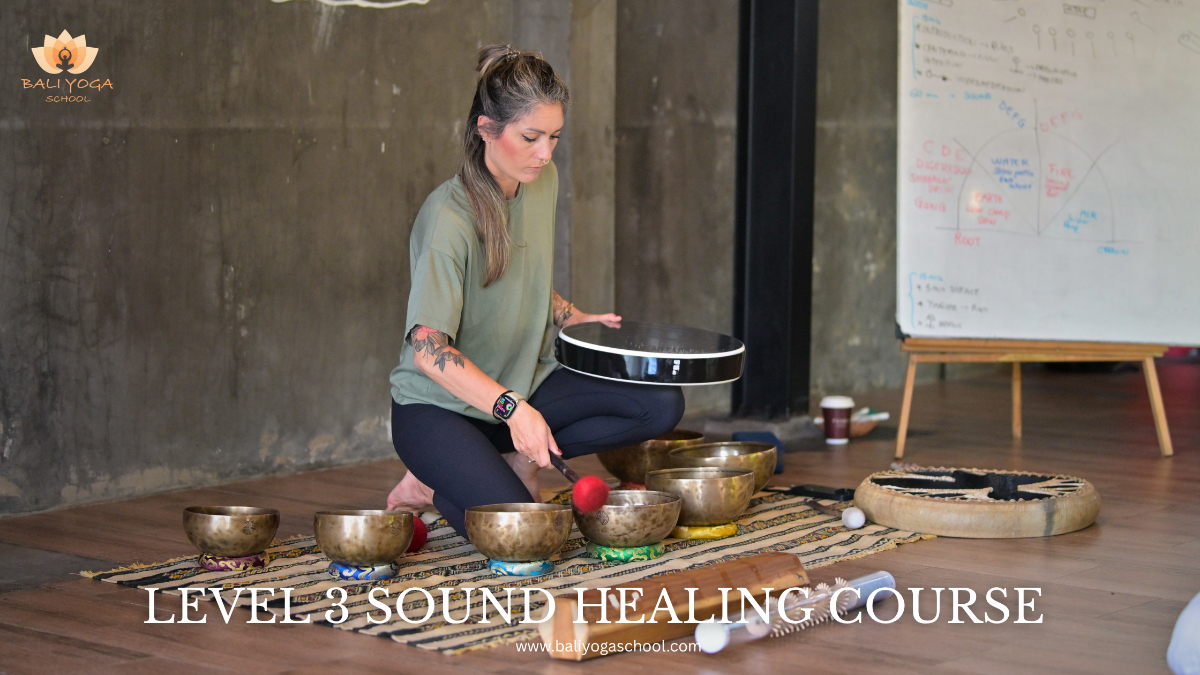
Sound Healing Level 3 in Bali introduces a wider variety of practical applications and sound healing instruments.
This level places particular emphasis on conducting sound bath sessions and exploring techniques involving different types of sound-producing instruments.
Students begin looking beyond individual singing bowl techniques to understand how several instruments can be used together in a structured session.
What Will You Learn in Level 3?
1. Introduction to Sound Baths
Students study the concept of a sound bath and the practical process of conducting a sound bath session.
Sound baths generally involve participants listening to different instruments while resting or practising meditation.
A session may involve singing bowls, gongs, chimes, and other instruments, with attention to timing, volume, transitions, and participant comfort.
2. Traditional Back Pain Therapy Techniques
The syllabus includes sound healing approaches described as back pain therapy.
These are taught as traditional wellness practices, not as replacements for medical evaluation, physiotherapy, or professional pain management.
3. Whole-Body Massage Techniques
Students explore the school’s whole-body massage applications involving sound healing methods.
Training includes understanding the different approaches described in the traditional curriculum and the importance of safe and comfortable instrument use.
4. Relationship and Family Therapy Concepts
Level 3 introduces the traditional approaches described in the school syllabus as relationship therapy and family therapy.
These modules concern the school’s sound healing framework and should not be confused with licensed psychological counselling or family psychotherapy.
5. Introduction to Additional Instruments
One of the distinctive features of Level 3 is the introduction to several sound healing instruments, including:
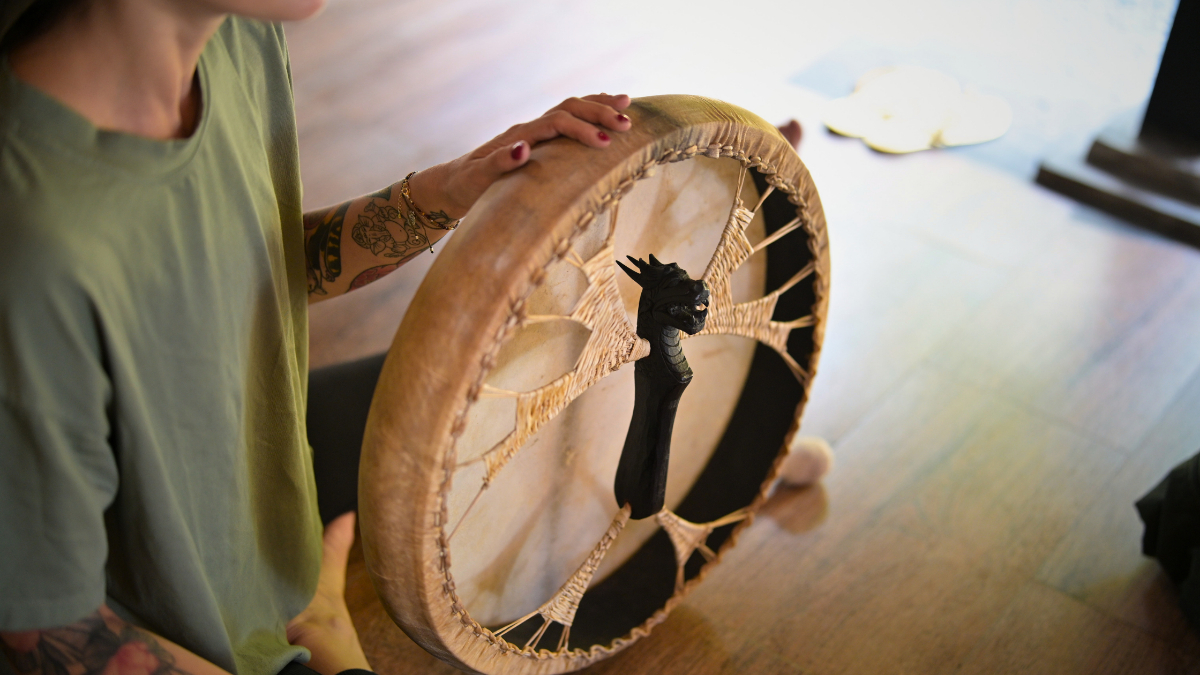
- Shamanic drum
- Ocean drum
- Nine-bar chimes
- Rain stick
- Tingsha
Learning about different instruments helps students understand the variety of sounds, playing techniques, and combinations that may be used in sound bath sessions.
The detailed Level 3 course description also explores Tibetan singing bowl massage, non-contact sound baths, group meditation facilitation, gong sessions, and sound frequencies.
Who Should Choose Level 3?
Level 3 is suitable for students interested in expanding their practical repertoire beyond introductory singing bowl work.
It is especially relevant to people who want to explore multi-instrument sound baths, traditional wellness session formats, and more detailed practical applications.
Yoga teachers, retreat facilitators, and experienced meditation practitioners may find this level particularly useful when developing group relaxation experiences.
The key difference between Level 2 and Level 3 is the greater emphasis on full sound bath facilitation and additional sound instruments.
 Sound Healing Level 1 vs Level 2 vs Level 3: Key Differences
Although all three levels involve sound healing, each follows a different learning focus.
| Training Level | Main Focus | Key Learning Areas |
|---|---|---|
| Level 1 – Fundamentals | Understanding Tibetan singing bowls | Bowl selection, holding and playing techniques, introductory relaxation, aura concepts, session preparation, and safety |
| Level 2 – Chakra Applications | Developing traditional wellness applications | Seven chakras, chakra balancing concepts, space cleansing, and mental and physical wellness practices |
| Level 3 – Sound Bath Facilitation | Working with multiple instruments | Sound bath sessions, whole-body applications, traditional relationship and family wellness concepts, drums, chimes, rain sticks, and tingsha |
The progression can be understood through three practical questions:
Level 1: How do I select, hold, and play Tibetan singing bowls correctly?
Level 2: How can I apply singing bowl techniques within traditional chakra and wellness practices?
Level 3: How can I combine different instruments and organise a complete sound bath experience?
Students can choose the level that best matches their background and intended learning outcomes.
Can You Study Multiple Sound Healing Levels Together?
Yes. Bali Yoga School also offers combined sound healing programmes for students who want to study more than one level.
The Level 1 & 2 Sound Healing Course combines foundational singing bowl training with chakra-related applications.
The Level 2 & 3 Sound Healing Course provides another combined learning pathway for students interested in continuing their practice.
We also offer a comprehensive Level 1, 2 & 3 Sound Healing Course in Bali, covering all three levels of training in one programme.
For students who want to continue beyond these foundations, Bali Yoga School also publishes advanced training options, including Level 4 Sound Healing and Level 5 Sound Healing.
Students should review the current course syllabus and confirm appropriate entry requirements before choosing their programme.
Safety and Responsible Sound Healing Practice
Responsible sound healing training involves more than learning how to produce pleasant sounds.
Students should understand that individual responses to sound can differ. Some participants may find particular instruments relaxing, while others may experience discomfort or sensitivity.
According to the World Health Organization’s guidance on safe listening, hearing risk depends on sound intensity, duration, and frequency of exposure. For example, WHO identifies 80 decibels for up to 40 hours per week as a reference point for safe listening exposure.
Sound bath facilitators should therefore consider volume, distance from instruments, session duration, and participants’ comfort.
It is also important to distinguish general sound healing and relaxation practices from clinical music therapy.
The American Music Therapy Association defines music therapy as a clinical, evidence-based practice delivered by an appropriately credentialed professional.
Completing a sound healing course does not automatically qualify someone to diagnose or treat medical or psychological conditions.
Maintaining these boundaries helps practitioners approach traditional sound healing with both respect and professional responsibility.
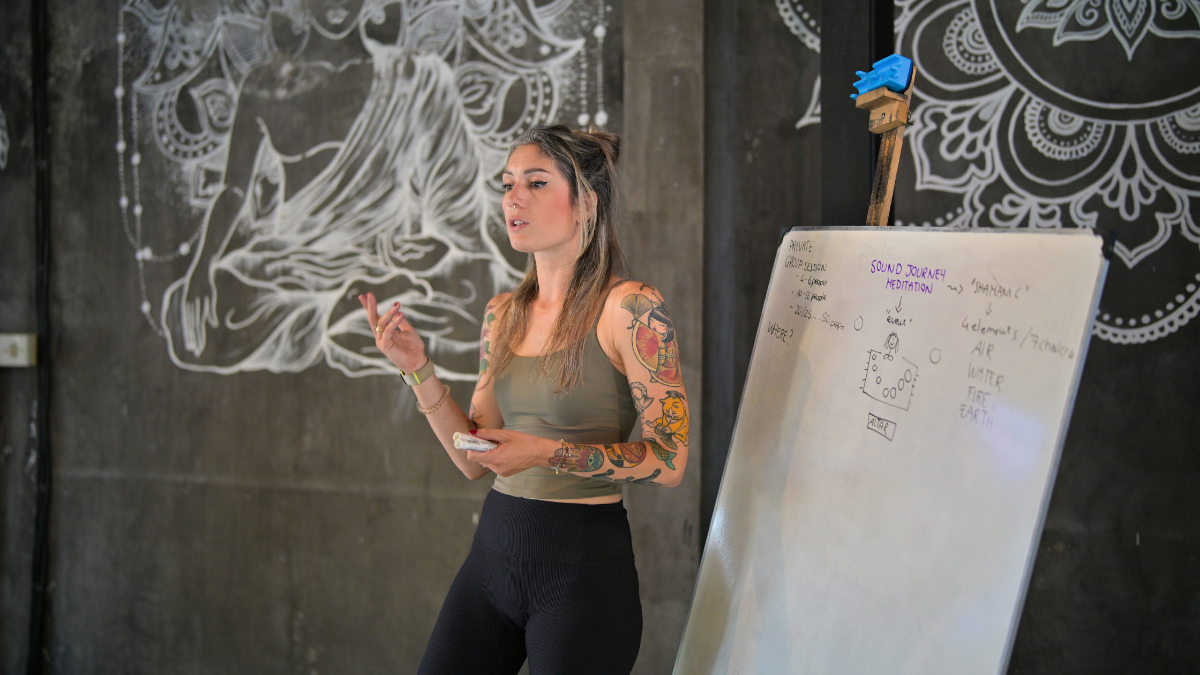
Study Sound Healing at Bali Yoga School in Ubud
Our sound healing training takes place in Ubud, Bali, Indonesia.
Bali Yoga School offers residential courses where students can combine sound healing lessons with a structured wellness-oriented daily routine.
Depending on the course and accommodation package, published inclusions include sound healing theory and practical classes, yoga and meditation sessions, course materials, vegetarian or vegan meals, accommodation, Balinese massage treatments, and swimming pool access.
Students completing the relevant course successfully receive a Bali Yoga School sound healing level certificate, as described on the individual course pages.
Our sound healing programmes are connected with the wider Himalayan Yoga Association community, founded by Yogi Himanshu Joshi.
Students can learn more about the school’s teaching philosophy, background, and traditional yoga education approach on our About Bali Yoga School page.
By combining theory with hands-on learning, we aim to help students understand both traditional sound healing concepts and the practical skills involved in working with singing bowls and other instruments.
Our approach places importance on individual practice, careful observation, and understanding the purpose of each technique rather than simply memorising a list of methods.
Frequently Asked Questions
Is Sound Healing Level 1 Suitable for Beginners?
Yes. Level 1 introduces the fundamentals of Tibetan singing bowls, making it an appropriate starting point for people without previous sound healing training.
What Is the Main Difference Between Level 1 and Level 2?
Level 1 focuses on the basic techniques of singing bowl practice. Level 2 introduces more detailed chakra-related methods, space cleansing, and traditional wellness applications.
What Makes Level 3 Different?
Level 3 includes sound bath facilitation, traditional whole-body applications, and additional instruments such as the shamanic drum, ocean drum, chimes, rain stick, and tingsha.
Can I Join a Sound Healing Course Without Yoga Teaching Experience?
Yes. The introductory sound healing courses are designed for people from different backgrounds, including beginners, meditation enthusiasts, yoga practitioners, and wellness professionals.
Is Sound Healing Scientifically Proven to Treat Medical Conditions?
Current research suggests that singing bowl sessions may have potential benefits for relaxation and certain well-being outcomes. However, existing clinical studies have limitations, and sound healing has not been established as a replacement for medical or psychological treatment.
Can I Learn All Three Sound Healing Levels in One Programme?
Yes. Bali Yoga School offers a combined Sound Healing Level 1, 2 & 3 Course for students who want to explore all three levels within a structured programme.
Do Students Receive a Certificate?
Yes. Bali Yoga School lists a certificate upon successful completion of each individual sound healing level. Students should confirm the exact certificate and any applicable registration details with the school.
How Do I Choose the Right Sound Healing Course?
Beginners can start with Level 1. Students interested in chakra-related traditions may consider Level 2, while those who want to explore multi-instrument sound baths may find Level 3 more relevant.
The best choice depends on existing experience, practical interests, and the type of sessions a student hopes to facilitate.
Conclusion: Which Sound Healing Level Is Right for You?
Choosing between Sound Healing Level 1, Level 2, and Level 3 depends on your current experience and what you want to learn.
Level 1 establishes the foundation of Tibetan singing bowl practice. Level 2 develops knowledge of chakra-related applications and traditional sound healing methods. Level 3 introduces sound baths, additional instruments, and broader practical techniques.
At Bali Yoga School in Ubud, students can explore these subjects through individual or combined sound healing courses.
Whether you are beginning your journey or developing existing skills, understanding the syllabus of each level will help you select a training programme aligned with your interests.
Sound healing is a field where personal experience, traditional knowledge, and emerging scientific research meet. Learning the practical techniques while understanding the limits of current evidence can help students develop a more informed and responsible approach.
Explore our Sound Healing Courses in Bali and discover the learning pathway that suits you.
Visit www.baliyogaschool.com for course details, accommodation options, availability, and booking information.
Editorial note: This article is based on Bali Yoga School’s published Sound Healing Level 1, 2, and 3 syllabi and publicly available scientific research. Traditional sound healing terminology is explained in its educational context. Course schedules, inclusions, and certification details should be confirmed with the school before enrolment.