How to Prepare for 200-Hour Yoga Teacher Training in Bali
Prepare for 200-hour yoga teacher training in Bali with a practical four-week plan covering study, teaching skills, packing, travel and certification.
In this article
You can enjoy a yoga class for years without ever having to explain a posture out loud. Then you book teacher training and start wondering: What if I forget the words? Will everyone else know more than me? How will I manage a full day of learning?
Preparing for 200-hour yoga teacher training in Bali means making space for regular practice, study, feedback and rest. You do not have to arrive with every answer. You do need to understand the commitment you are making.
This guide offers a flexible four-week preparation plan for prospective students. For the full syllabus, current fees and available dates, visit our 200-hour yoga teacher training in Bali course page.
Published by Bali Yoga School. The preparation suggestions below are optional editorial guidance; course arrangements and external standards are linked to their sources.
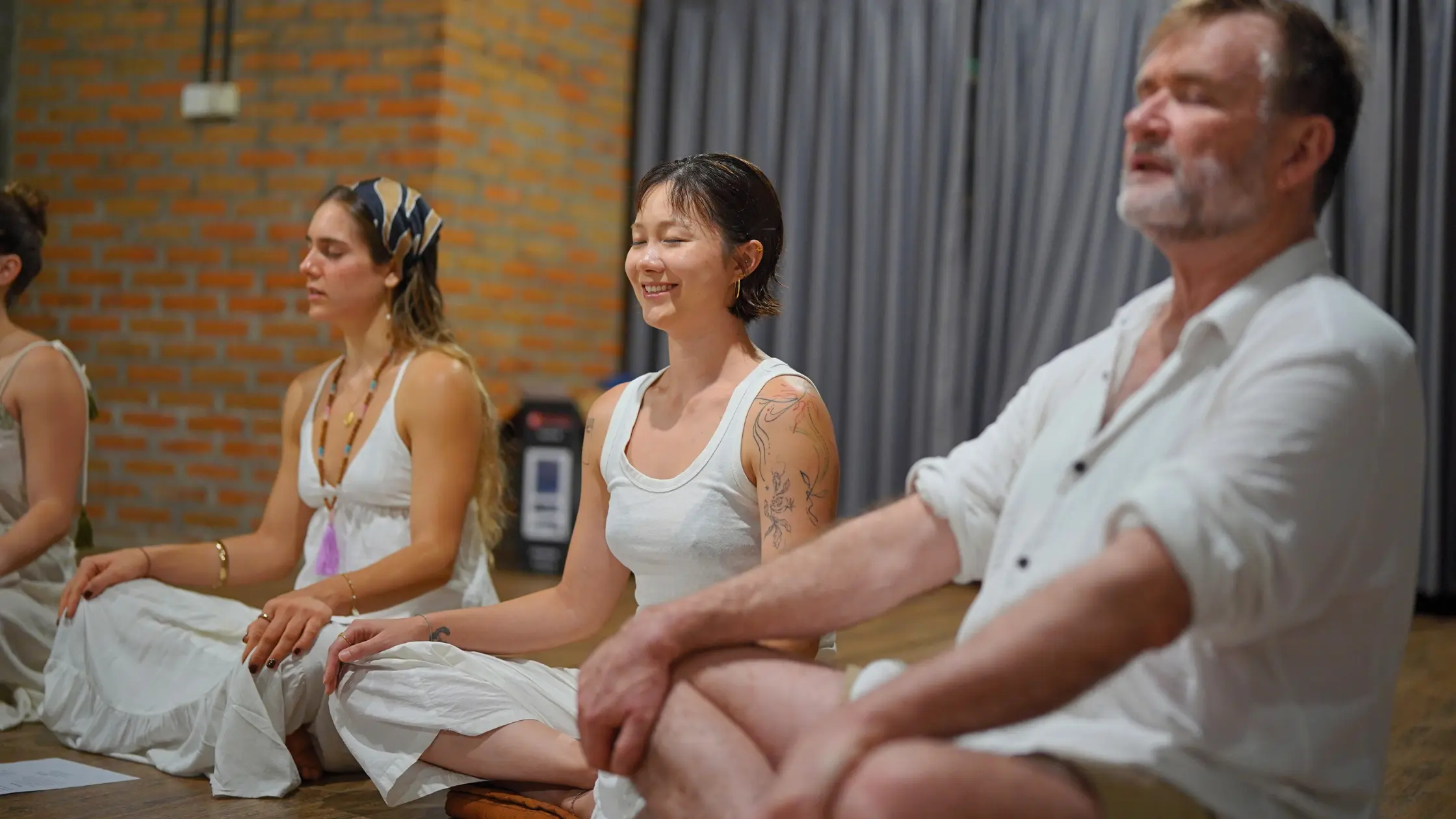 Start by Understanding What “200 Hours” Means
Before buying another pair of yoga leggings, look closely at the course workload.
Bali Yoga School currently publishes the following breakdown for its multi-style 200-hour program:
- 160 hours of classes: 20 training days multiplied by eight hours.
- 40 hours of self-study: two hours per training day.
- A stated total course period of 25 days.
That is a substantial study commitment. Independent learning needs time too, even when you have finished the scheduled classes. Confirm the exact check-in date, checkout date and included accommodation nights for your chosen batch.
Yoga Alliance’s RYS 200 curriculum framework groups learning into four areas: techniques and practice, anatomy and physiology, yoga humanities, and professional essentials. That last area includes teaching skills and practice teaching. Spending time on the mat is only part of the preparation.
Can a Beginner Prepare for Yoga Teacher Training?
Bali Yoga School welcomes beginners to its foundational 200-hour program. Previous teaching experience is not required.
Still, being new to teaching and being new to yoga are different starting points. If you have only attended a few classes, tell the school. Describe what you currently practise, how often you attend and anything you find difficult.
Our existing guide to yoga in Bali for beginners explains the broader learning environment. This article focuses on the weeks before you arrive.
You can also join with personal study in mind. If you are unsure about teaching professionally, explain that when enquiring so you understand the participation and assessment requirements.
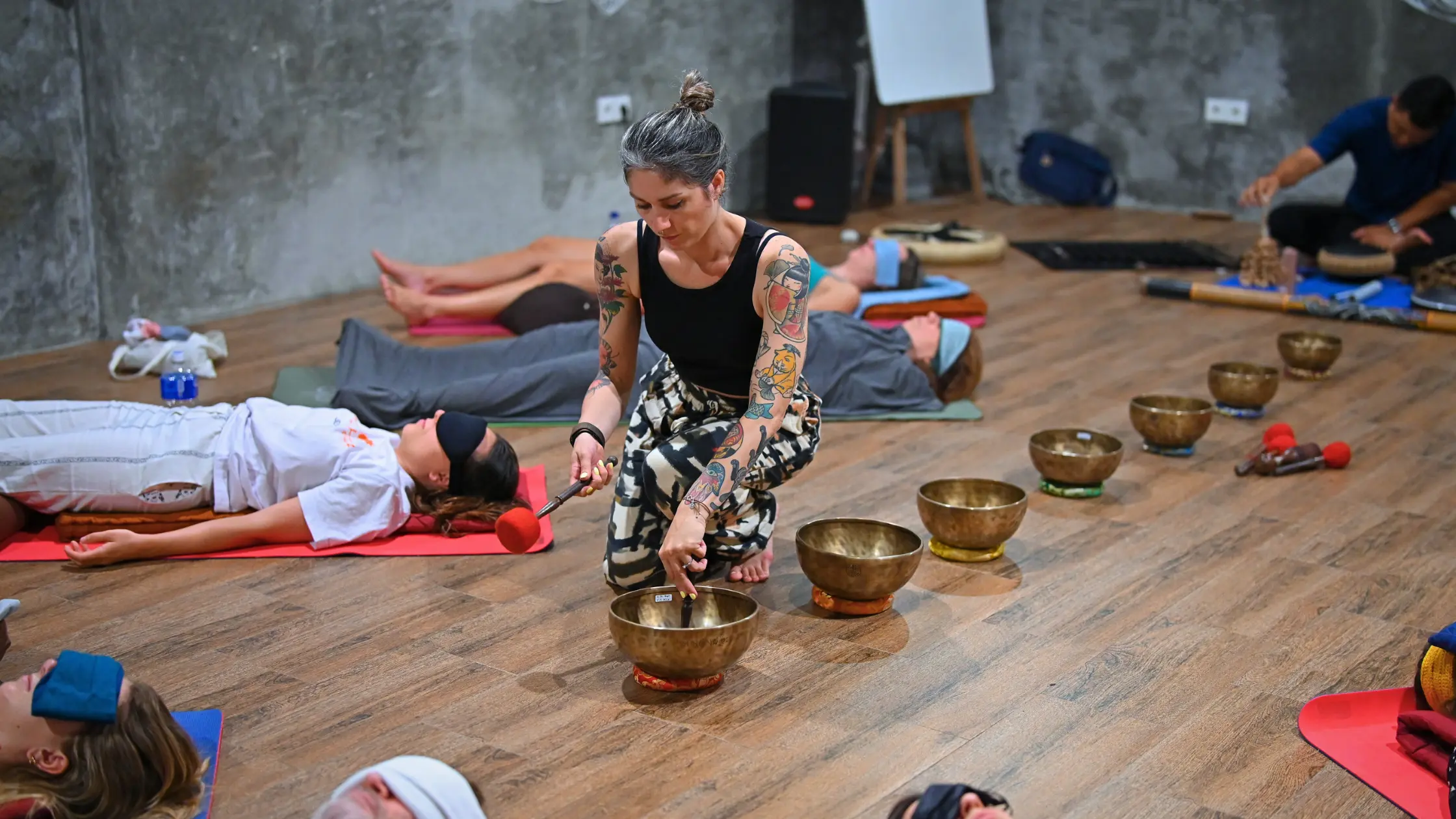 A Four-Week Preparation Plan Before You Arrive
Use this as a flexible checklist, adjusting it to your current experience, health and available time. The suggested exercises are not entrance tests or requirements.
Week 1: Get Clear About Your Starting Point
Write down why you want to attend. Try to make the answer specific: “I want to learn to explain a beginner class clearly” is easier to work with than “I want to be better at yoga.”
Then note three things: what you already enjoy, what you find challenging and what you want to ask a teacher. You might feel comfortable following a flow but unsure about anatomy, or enjoy philosophy while finding early mornings difficult.
Review the Bali Yoga School teaching team and ask who is expected to teach your batch. If something about the course is unclear, this is a good time to ask.
Keep your existing practice manageable. The U.S. National Center for Complementary and Integrative Health recommends qualified instruction and advises beginners against extreme postures and forceful breathing practices. Discuss injuries or health conditions with an appropriate healthcare professional and your prospective teachers.
Begin travel-health preparation now, too. The CDC’s Indonesia travel guidance recommends seeing a doctor at least a month before travel to discuss vaccines or medicines you may need.
Week 2: Practise Paying Attention as a Student
During your next class, notice how the teacher gives instructions. What do they say first? When do they pause? How do they offer a different option without interrupting the class?
Afterwards, spend five minutes writing down one clear instruction, one question and one thing you noticed about the sequence. The aim is to develop your attention, not to copy someone else’s class.
Make a small vocabulary list. Start with words you hear often, such as asana, pranayama, meditation, alignment and sequencing. If English is not your first language, practise explaining a familiar movement in short, simple sentences.
For a taste of philosophical study, explore this Bali Yoga School philosophy session. Our student FAQ also suggests introductory reading, including the Yoga Sutras and Bhagavad Gita. Ask the school which editions or materials it recommends before buying several books.
Week 3: Get Used to Hearing Your Own Teaching Voice
Choose one familiar, comfortable posture and privately record a short verbal explanation. You are rehearsing language, so there is no need to guide another person or introduce a difficult pose.
Listen to the recording and ask:
- Did I explain the starting position?
- Did I give one instruction at a time?
- Did I leave enough time to understand each sentence?
- Did I explain how to come out of the posture?
You may discover that a sentence which sounded clear in your head feels rushed when spoken. That is useful information to bring to teacher training.
Also familiarise yourself with consent. Yoga Alliance’s Code of Conduct requires members to obtain explicit, informed consent before physical adjustments. A student’s silence does not establish permission, and consent can change.
A useful teaching sentence to practise is simply: “Would you prefer a verbal explanation?”
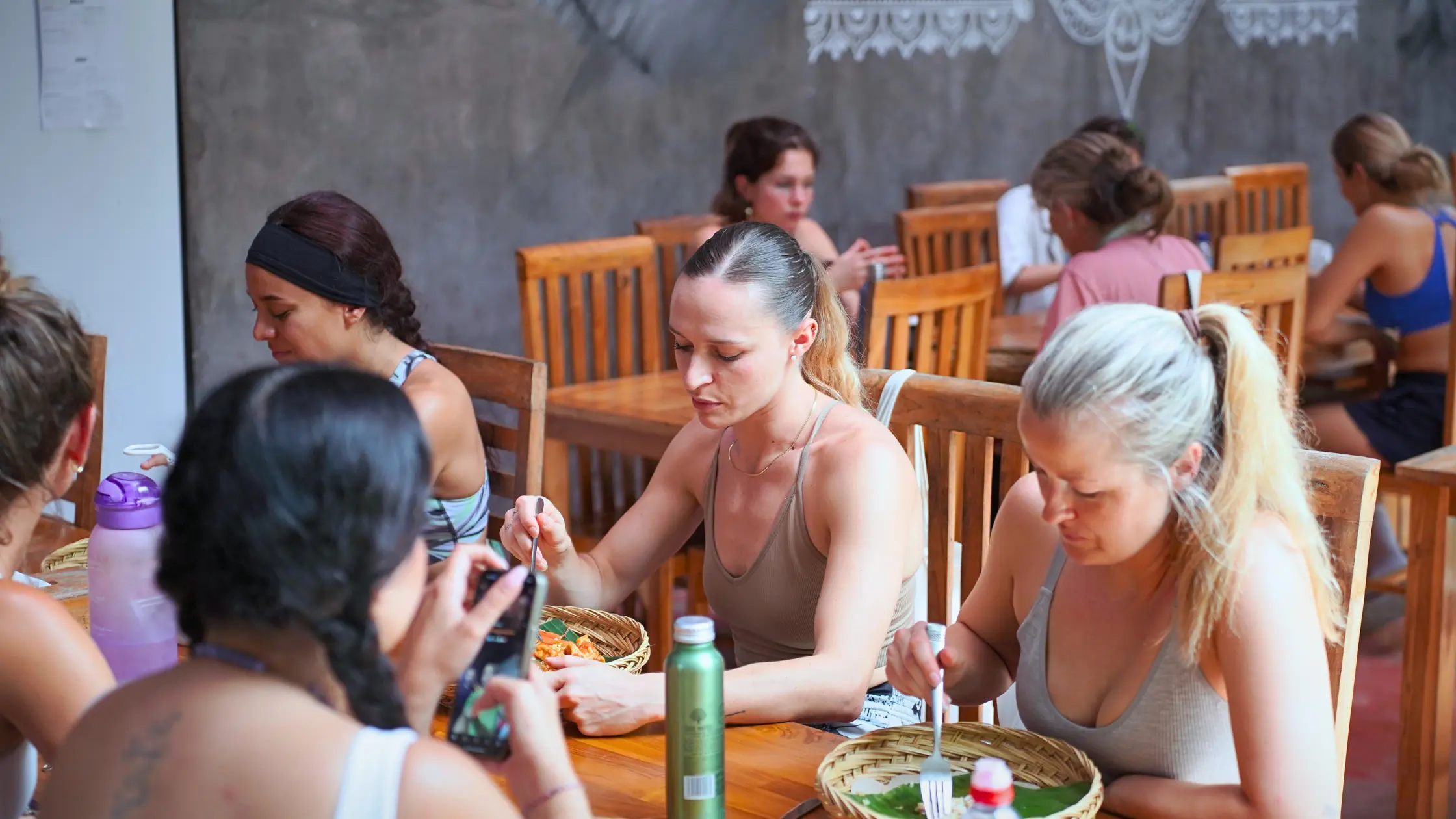
Week 4: Make Arrival Easier
Use the final week to settle practical details rather than squeeze in a last-minute fitness challenge.
Review the Ubud campus photographs and campus videos. Ask about your actual room category, bathroom arrangements, laundry and distance from classes.
Read the school’s food menu and explain any allergies before arrival. Vegetarian or vegan food is not automatically free from nuts, dairy, gluten or cross-contact.
Pack comfortable practice clothes, a notebook, a water bottle, suitable footwear and your usual personal essentials. Our rainy-season yoga training guide has more advice for wetter travel dates.
Finally, send your flight details through the school’s official communication channel. Confirm the transfer meeting point, contact number and accommodation dates. Save copies offline so you can find them without mobile data.
Five Questions to Ask Before Paying a Deposit
A clear answer now is much more useful than an assumption you have to resolve after landing.
- Who will teach my batch? Ask about the trainers, their responsibilities and expected group size.
- How does practice teaching work? Ask whether you teach individuals, small groups or full classes, and how you receive feedback.
- How is completion assessed? Confirm attendance, theory and practical requirements, including arrangements for illness.
- What exactly does my package include? Request the room type, meals, airport transfer and any additional charges in writing.
- What are the cancellation and rescheduling terms? Read them before paying, particularly if your travel plans might change.
Send these questions through the Bali Yoga School contact page. For a wider look at residential study, read what to expect from yoga training in Ubud.
Leave Advanced Breathing and Cleansing Practices for Supervised Learning
Seeing an unfamiliar technique in a syllabus does not mean you need to teach yourself before arrival. Ask the relevant teacher about suitability, precautions and alternatives.
For example, nasal irrigation has specific hygiene requirements. The FDA’s neti-pot safety guidance explains that ordinary tap water is unsuitable for nasal rinsing; appropriate options include distilled, sterile, or properly boiled and cooled water. This is one reason guided instruction matters.
Understand the Certificate Before You Plan Your Teaching Career

Consult Yoga Alliance’s teacher resources for the application process and current requirements. If you are planning for 2027, also read its announced credential and membership changes.
Ask prospective employers and insurers what they require where you intend to teach. Work permission and any local professional requirements need separate checking.
Teacher training also has professional limits. Yoga Alliance’s Scope of Practice requires members to work within their competence and credentials. A foundational course does not qualify you to diagnose injuries or provide medical treatment.
What If You Are Not Ready for a Full 200-Hour Course?
Give yourself time to decide. A shorter stay may suit your current circumstances better.
Explore our 100-hour yoga teacher training and ask how it fits into the school’s wider training pathway. A shorter course does not, by itself, satisfy a 200-hour training requirement.
If you mainly want guided practice and time away, consider a short yoga retreat in Ubud. If you already know that Yin is your main interest, compare the content of our 200-hour Yin yoga teacher training before choosing.
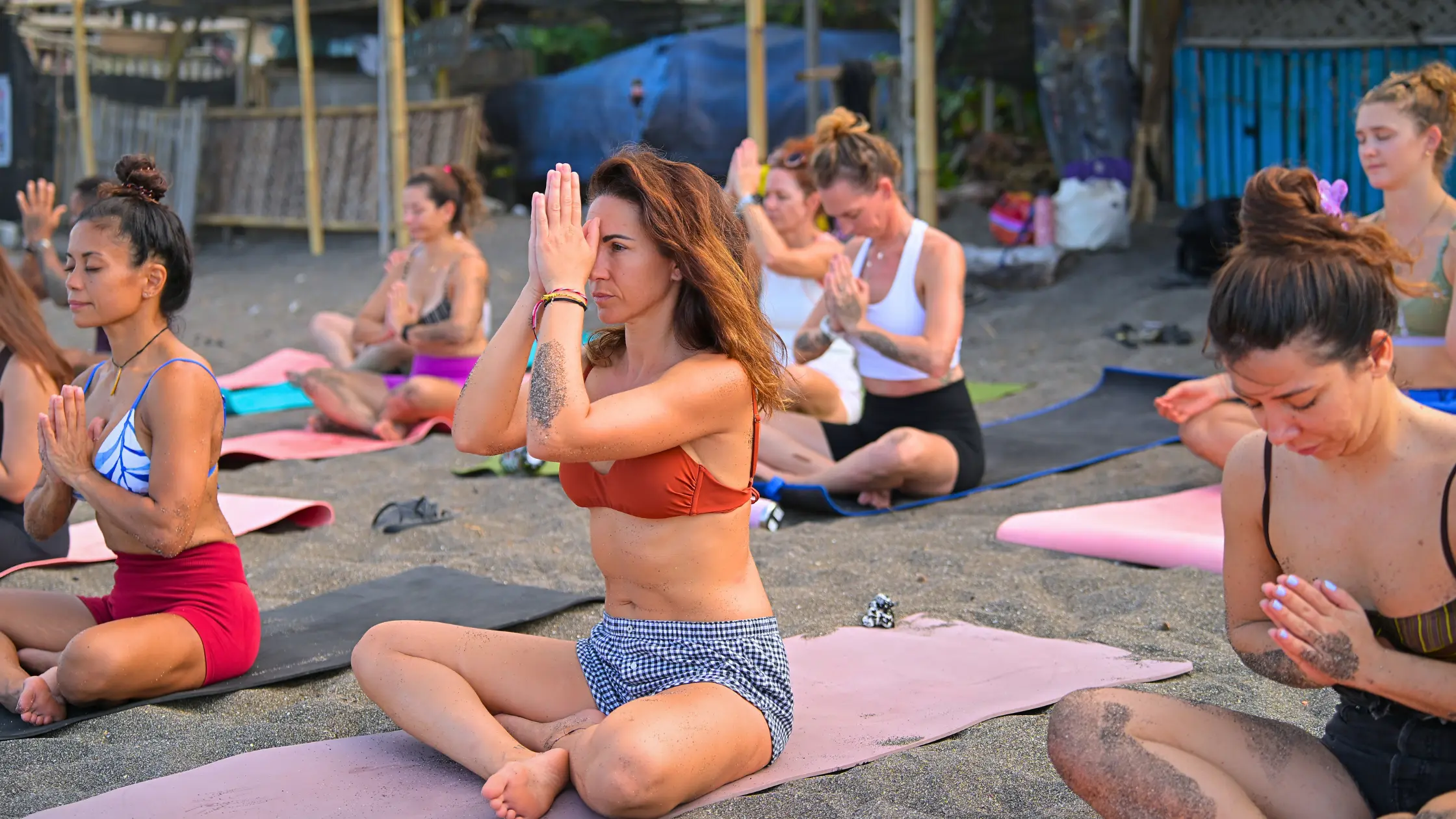 Frequently Asked Questions
Do I need to master advanced poses before teacher training?
No. Bali Yoga School accepts beginners into its foundational program. Describe your experience honestly and ask about any physical concerns before enrolling. You can arrive ready to learn without being able to perform advanced postures.
How much should I practise before arriving?
There is no single preparation schedule that suits everyone. Keep a manageable routine and ask your current teacher or the school what is appropriate for your starting point. Preparation includes study and rest as well as physical practice.
Do I have to become a yoga teacher afterwards?
You can study for personal development. You should still understand and be prepared to meet the course’s participation and assessment requirements.
Can I work remotely during the training?
Review the complete timetable before committing to work. With substantial class and self-study hours, reliable daily availability for meetings or deadlines may be difficult. Wi-Fi alone does not make a full work schedule practical.
Arrive With Questions and Room to Learn
You do not have to become a teacher before teacher training begins. A useful starting point is knowing your current practice, being willing to ask questions and having your travel arrangements in order.
Use the coming weeks to listen carefully, read a little, practise explaining a familiar idea and make space for rest.
When you are ready, explore the complete 200-hour yoga teacher training in Ubud, Bali for the latest course information and booking details.