Yoga School in Bali: What to Expect From Training in Ubud
Discover what residential yoga training in Ubud involves, from daily classes and accommodation to course certificates and preparing for your stay.
In this article
 Studying at a Yoga School in Bali: What to Expect From Residential Training in Ubud
You may have imagined practising yoga in Bali for a long time. But once you begin looking at courses, practical questions soon appear.
What does a training day actually involve? Will you have time to rest? What should you expect from the teachers, meals and accommodation? And how can you tell whether a course fits your goals?
These questions matter when choosing the best yoga school in Bali for your needs. A beautiful location is a welcome part of the experience, but you will also want a curriculum you can engage with, clear guidance from teachers and a living arrangement that feels comfortable.
At Bali Yoga School, students can study in Ubud through residential yoga teacher training, specialist courses and shorter retreats. This guide looks at what residential study can involve and how to prepare for your time on campus.
Why Do Students Come to Ubud to Study Yoga?
Ubud has a long-established arts and cultural life and is also known for yoga and wellness activities. The area attracts visitors who want to spend time studying, practising and experiencing a different daily routine.
Yoga events form part of that wider community. Indonesia’s official tourism website describes the 2026 BaliSpirit Festival in Ubud as an event bringing together yoga, dance and music. Indonesian broadcaster RRI also reported on the festival, illustrating the range of visitors and activities associated with wellness in Bali. Neither source evaluates individual yoga schools. indonesia.travel
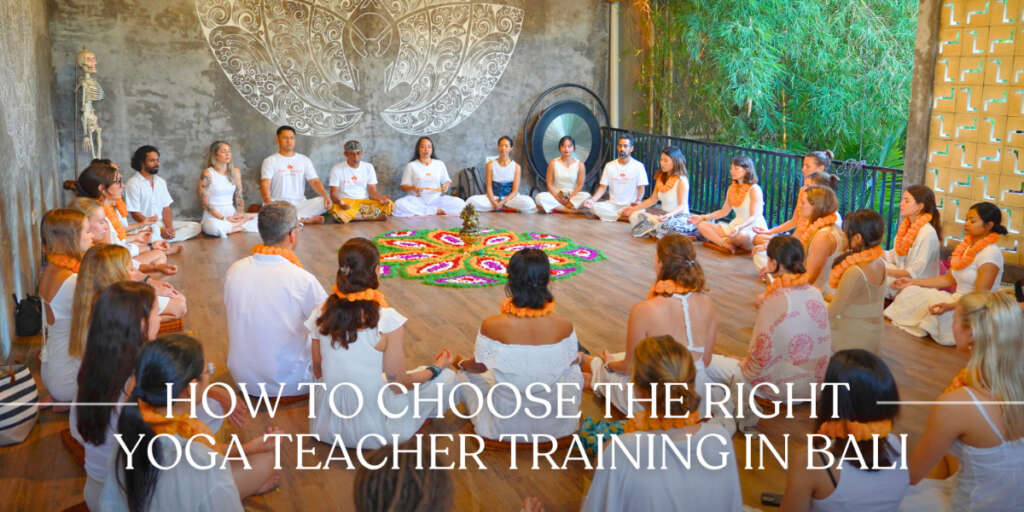
A residential course gives you the chance to experience Ubud while following a structured study schedule. Your classes, meals and accommodation are arranged as part of the program, while free time can be used for rest or exploring.
Bali Yoga School’s Ubud campus is in Singakerta. Before choosing a course, look at both the setting and the program details: you will spend most of your time learning, practising and living with the school community.
What Does Residential Yoga Training Mean?
A residential course means that students stay in accommodation associated with their training rather than travelling to class each day.
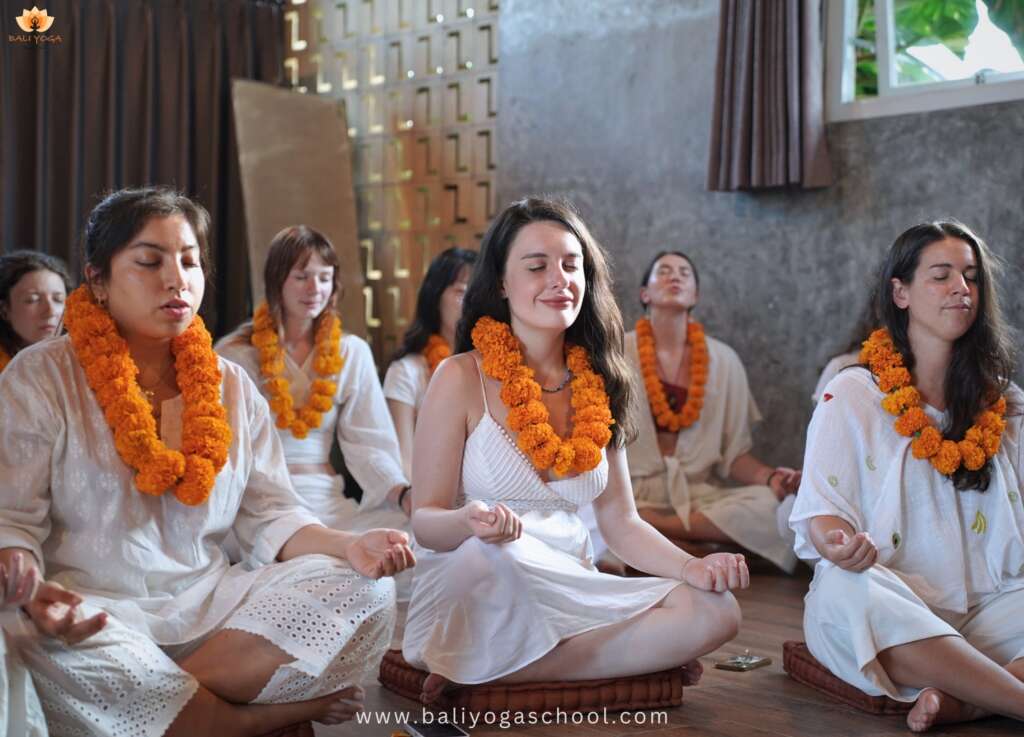
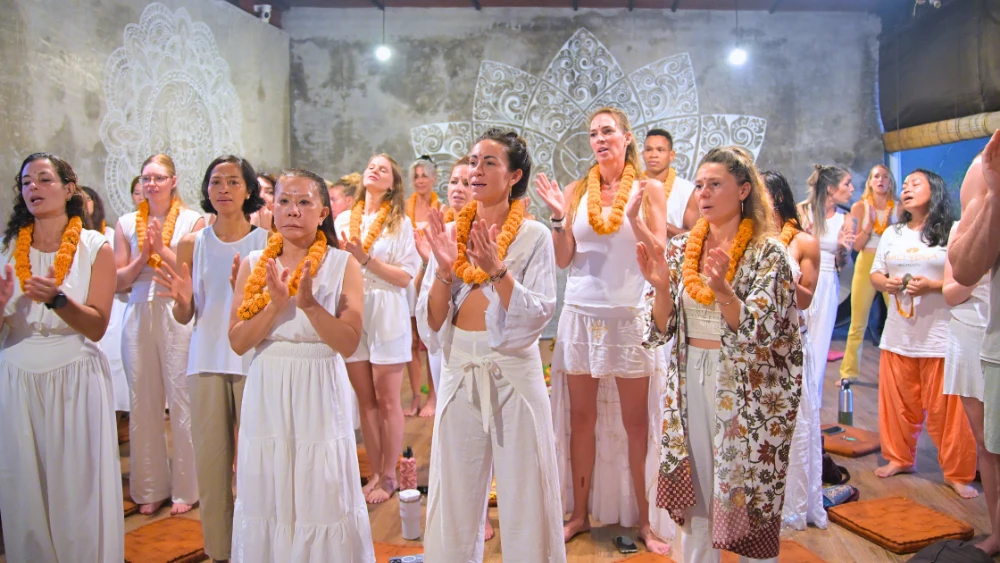
This arrangement can make it easier to establish a routine. You may wake up, attend morning practice, share meals with classmates and return to your room between sessions. It also creates opportunities to ask questions and discuss what you are learning outside the classroom.
The experience is different from a holiday where every day is unplanned. Teacher training includes scheduled practical classes, theory and assessments. It also requires time for personal study and rest.
Before booking, look at the itinerary for your specific course. The schedule for a retreat will differ from that of a teacher training program.
A Typical Day at a Yoga School in Bali
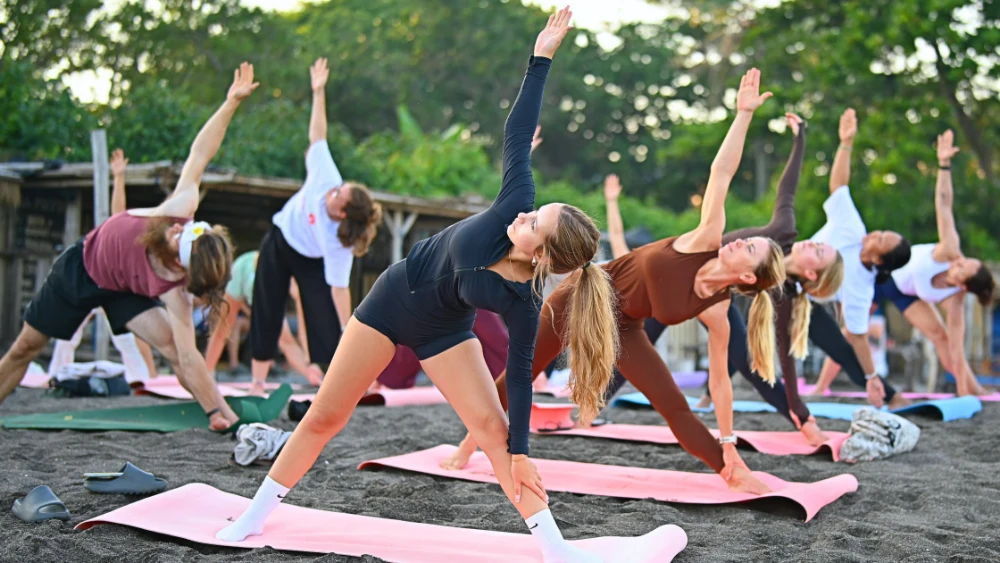
Although schedules vary, a teacher training day may include several types of learning:
- Morning practice, which may include pranayama, meditation or asana.
- Theory classes, covering subjects such as anatomy or yoga philosophy.
- Practical instruction, including posture study and teaching methods.
- Meals and breaks, with time to rest between sessions.
- Independent study or assignments, depending on the program.
Bali Yoga School’s 200-hour teacher training page provides the course syllabus and a published daily schedule. Review it before enrolling so you understand the pace of the program.
A full day of study can feel rewarding, but it can also be tiring—particularly during the first few days. Give yourself permission to adjust to the routine. Bring a notebook, ask questions when you need clarification and use breaks for rest as well as conversation.
 Choosing the Right Course Length
Your available time is important, but so is the purpose of your training. A shorter course may help you begin structured study, while a longer program gives you more time to explore teaching and theory.
| Course | Who may want to explore it? | What to check before booking |
|---|---|---|
| 100-hour training | Students who want a shorter introduction or a staged approach to study | How the course fits any future 200-hour plan |
| 200-hour training | Students seeking foundational yoga teacher education | Curriculum, assessments and registration eligibility |
| 300-hour training | Students continuing their education after foundational training | Entry requirements and how previous training is assessed |
| 500-hour training | Students planning a longer period of foundational and advanced study | Course structure, dates and completion requirements |
Bali Yoga School’s frequently asked questions describe an option to complete its foundational training in two 100-hour parts. If this interests you, ask the team how the two components are arranged, what must be completed and how the resulting certificate relates to your intended credential.
A 100-hour course on its own should not be assumed to meet the full requirements for an RYT 200 registration.
Can Beginners Join Yoga Teacher Training in Bali?
You do not have to arrive knowing every posture or Sanskrit term. A foundational course is designed to introduce a range of subjects, and students begin with different levels of experience.
It helps to be willing to practise consistently, listen, ask questions and accept feedback. If you are new to yoga, speak with the school about the demands of the daily schedule and whether the course is suitable for you.
You should also tell the team about any relevant injuries, pregnancy, health conditions or accessibility needs. If you are unsure about participating in an intensive course, consult a qualified healthcare professional.
The U.S. National Center for Complementary and Integrative Health’s yoga guidance discusses safety, appropriate instruction and individual circumstances. It also notes that injuries can occur, even though yoga is generally considered safe when practised appropriately. NCCIH
During class, you can ask for a variation or take a break. A more difficult-looking posture is not a requirement for being a thoughtful student or teacher.
What Will You Study Beyond Yoga Postures?
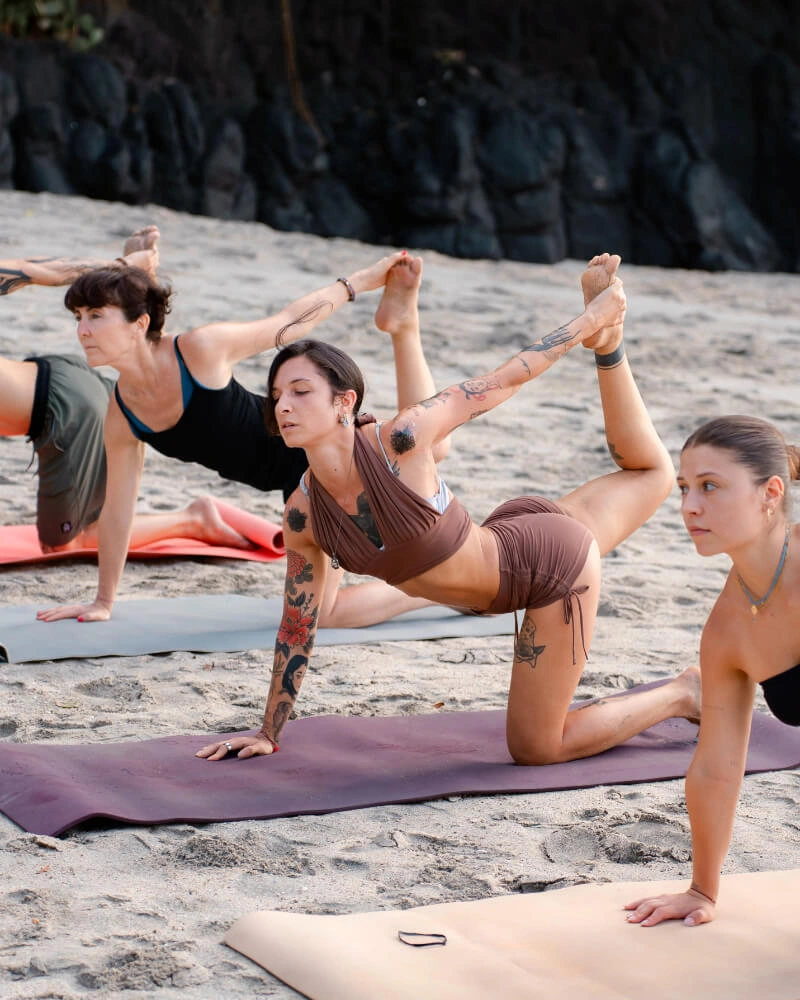
Asana is a visible part of yoga training, but it is one part of a wider course. Bali Yoga School’s 200-hour curriculum includes subjects such as breathing practices, meditation, anatomy, philosophy and teaching methodology.
Each subject brings a different kind of question.
Anatomy and Movement
Anatomy gives students language to discuss how the body moves. It can help you consider why a posture may look or feel different from one person to another.
For a basic educational resource, OpenStax at Rice University explains types of body movement, including flexion, extension and rotation.
Anatomy knowledge helps a yoga teacher communicate and adapt instruction. It does not, by itself, qualify someone to diagnose an injury or provide medical treatment.
Pranayama and Meditation
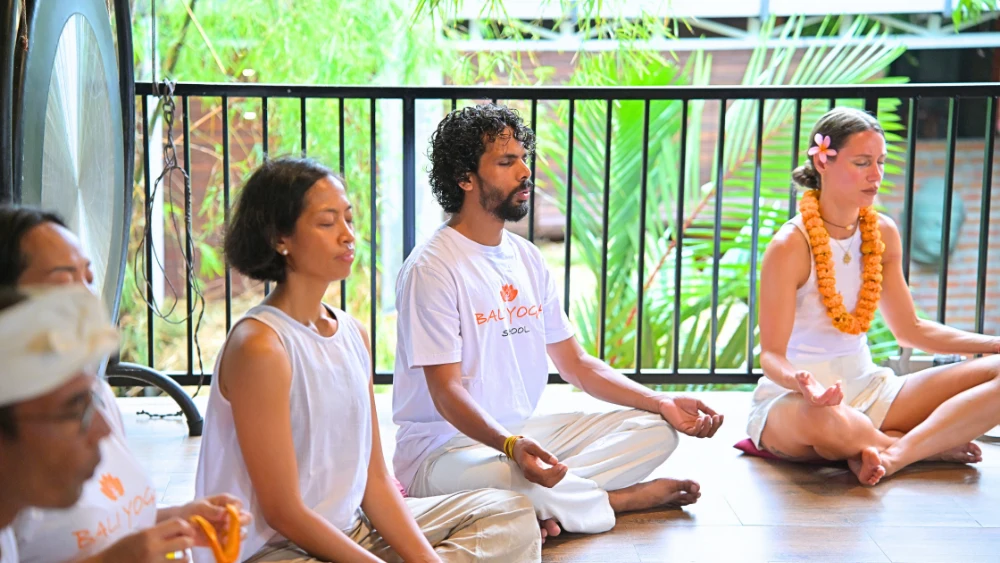
Breathing practices and meditation may be unfamiliar at first. You can approach them as a learner: listen to the instructions, ask about suitability and avoid forcing a technique.
If sitting on the floor is uncomfortable, ask your teacher about a cushion or another supported position. The NCCIH guide to meditation and mindfulness provides background on research and safety.
Yoga Philosophy
Philosophy classes introduce ideas and questions that may be new even to experienced practitioners. Instead of trying to memorise every term immediately, note down a question you can bring to class.
For scholarly background, the Internet Encyclopedia of Philosophy’s introduction to Patañjali’s Yoga Sūtras discusses the text and its philosophical context.
How Will You Practise Teaching?
Learning to guide someone through a movement requires a different kind of attention from following a class yourself.
During teaching practice, you may need to think about:
- Where your students are positioned.
- Whether your instructions are clear.
- How much time people need to respond.
- What alternatives you can offer.
- How to finish a practice and invite feedback.
Ask the school how teaching exercises are supervised and assessed. It can also help to keep a notebook of instructions that worked well and questions you want to revisit.
A useful teacher does not need to claim to have every answer. Knowing when a question is outside your experience is an important part of teaching responsibly. Yoga Alliance’s Scope of Practice offers guidance on professional boundaries.
Consent and Hands-On Adjustments
If a class includes physical adjustments, you should be able to understand what is being offered and decide whether you are comfortable with it.
Yoga Alliance’s Code of Conduct requires its members to obtain explicit, informed consent before physical adjustments. You may ask for verbal guidance instead or change your mind about touch. yogaalliance.org
Meet the People Behind Bali Yoga School
The people guiding your training are as important as the course outline. Bali Yoga School’s founder is Yogi Himanshu Joshi, who also founded Himalayan Yoga Association in Rishikesh.
You can read the school’s teacher profiles to learn about faculty members and their areas of experience.
Teaching arrangements can change between intakes. If there is a subject you are especially interested in, ask who is expected to teach it during your batch and how students receive feedback.
You might also ask whether you can discuss modifications, ask questions after class or get clarification on an assignment. A course should give students opportunities to learn actively, rather than simply follow along.
 What Are the Rooms and Campus Facilities Like?
Your accommodation is your place to rest throughout the course, so look at it as carefully as the yoga schedule.
Bali Yoga School’s course pages describe private and shared accommodation options. The campus photographs and campus videos provide a useful introduction to the setting, rooms and communal spaces.
Before booking, ask:
- Which campus and room category are included in my fee?
- If I choose a shared room, how are roommates arranged?
- Does my room have air conditioning and a private bathroom?
- Are there stairs or accessibility considerations?
- What are the arrangements for laundry and Wi-Fi?
The school’s published campus information also describes gardens and swimming pools. Check access times and any facilities that are particularly important to your stay. www.baliyogaschool.com
What About Meals and Dietary Requirements?
Shared meals are part of residential life and can be a chance to get to know fellow students. Bali Yoga School provides vegetarian or vegan food as described in its course information.
You can review the school’s yogic food menu and ask which meals are included in your chosen package. Meal schedules and exceptions may differ by program.
If you have a food allergy or specific dietary requirement, contact the school before paying your deposit. Explain the ingredient, the severity of your allergy and any concerns about cross-contact. Ask whether the kitchen can safely accommodate your needs.
A vegetarian or vegan menu is not automatically suitable for every allergy, so an individual conversation is important.
Can You Study Yin Yoga at Bali Yoga School?
Yes. Students interested in a slower-paced practice can explore the school’s dedicated Yin Yoga programs.
Yin Yoga generally involves longer-held postures and close attention to individual comfort and body differences. A teacher can help you choose supports or variations when needed.
Bali Yoga School publishes several options:
- 50-hour Yin Yoga teacher training
- 100-hour Yin Yoga teacher training
- 200-hour Yin Yoga teacher training
Compare their curricula, entry requirements and certificates before choosing. If you are interested in advanced Yin study, ask the school about current availability and eligibility rather than assuming every listed program is open for enrolment.
What Does a Yoga Certificate Allow You to Do?
A certificate from a school confirms completion according to that school’s requirements. Yoga Alliance registration is a separate process.
Bali Yoga School publishes its Yoga Alliance registration information. If you plan to apply for an RYT credential, check the school’s current listing and relevant designation through the Yoga Alliance school directory.
Also read Yoga Alliance’s certificate requirements and confirm the current requirements for the credential you want. Yoga Alliance states that applicants need proof of successful completion of an eligible Registered Yoga School training. Yoga Alliance
A course certificate or registration does not automatically guarantee a teaching job, insurance coverage or permission to work in another country. Check the requirements of the place, employer and insurer relevant to your plans.
Can You Join a Retreat Instead of Teacher Training?
If you want time for yoga without the study and assessment commitments of teacher training, a retreat may be a better fit for your trip.
Bali Yoga School offers a 3-day yoga and healing retreat and a 5-day yoga retreat in Ubud, among other options.
Retreats focus on the activities described in their individual itineraries. They should not be confused with professional teacher training or assumed to provide a teaching qualification.
Exploring Sound Healing and Reiki
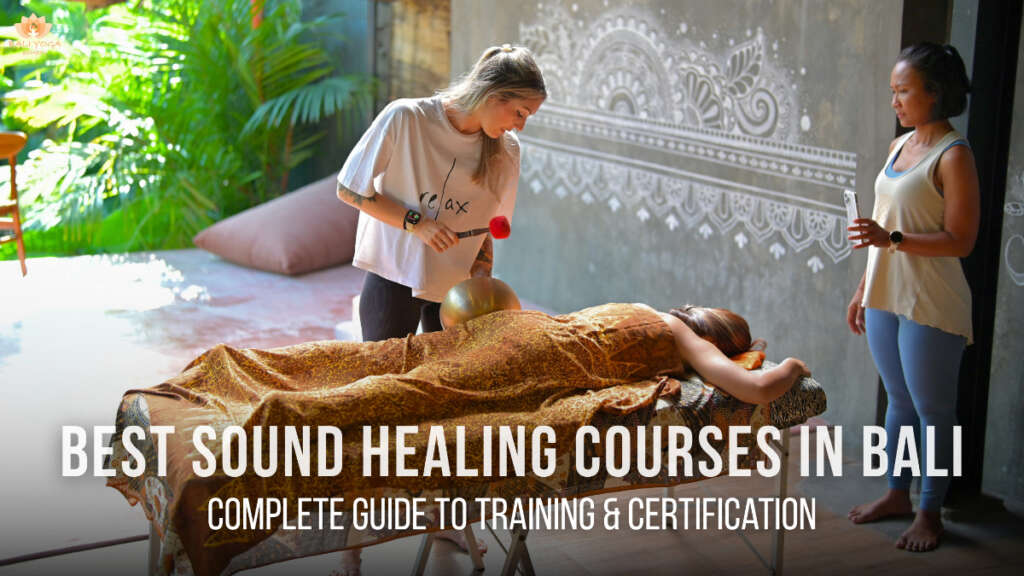
Students who are curious about other wellness practices can read about the school’s separate Level 1 Sound Healing course and Level 1 Reiki course.
These programs have their own schedules, fees and learning objectives; they are not prerequisites for yoga teacher training.
Reiki is a complementary practice. The NCCIH overview of Reiki states that it has not been clearly shown to be effective for health-related purposes and that there is no scientific evidence for the energy field proposed in Reiki. It should not replace professional medical care.
If you are considering an additional course during your stay, check that you will still have enough time for your main training and rest.
How to Prepare for Your Yoga Training in Bali
A little planning can help you arrive ready to focus on the course.
Read the syllabus. Note any subjects you are curious about or unsure of. You do not need to master them before arrival.
Build a manageable practice. If you already practise yoga, consistency is more useful than suddenly increasing intensity just before your course.
Pack for practice and study. Comfortable clothing, a notebook and personal essentials are a good starting point. Ask the school what yoga equipment and learning materials are provided.
Check travel documents. Visa and entry requirements depend on your nationality and circumstances. Consult the official Indonesian immigration website for current information.
Confirm arrival details. Ask about check-in times, airport transfers and any additional charge before finalising your travel plans.
Review your booking terms. Read the course payment information and request the cancellation, refund and rescheduling terms that apply to your course.
You can also use the Bali Yoga School FAQ for general questions, then contact the team about anything specific to your stay.
Questions to Ask Before Choosing a Yoga School in Bali
Before paying a deposit, make sure you have clear answers to the questions that matter to you:
- What prior experience does this course require?
- Who is expected to teach my batch?
- How are teaching practice and feedback organised?
- What attendance and assessment requirements apply?
- What certificate will I receive after successful completion?
- Is the specific program eligible for my intended Yoga Alliance application?
- Which room, meals and activities are included in the price?
- Can the school accommodate my health, dietary or accessibility needs?
- What are the cancellation and rescheduling terms?
- What are the arrival and departure dates for my intake?
A clear answer to these questions can help you choose a program with confidence and prepare for the experience realistically.
Frequently Asked Questions
How do I choose the best yoga school in Bali?
Start with your goals. Compare the curriculum, teachers, practical teaching opportunities, accommodation, total cost and certification information. The best choice is the school and course that fit your experience and expectations.
Is Bali Yoga School suitable for beginners?
Bali Yoga School offers foundational training options. Beginners should discuss their experience and any relevant health concerns with the school before enrolling, particularly because residential training follows a structured daily schedule.
What is the difference between a yoga retreat and teacher training?
A retreat is generally organised around the activities in its itinerary and may focus on practice and relaxation. Teacher training includes a curriculum, study and completion requirements. Check the specific program before booking.
Are accommodation and food included?
Bali Yoga School publishes residential packages that include accommodation and meals. Inclusions can vary by course and room category, so confirm the details for your booking.
Can I complete my 200-hour training in two parts?
The school’s FAQ describes a two-part 100-hour option. Contact the team for the current structure, timing and completion requirements, particularly if you intend to apply for a Yoga Alliance credential.
Does graduating automatically register me with Yoga Alliance?
No. Course completion and Yoga Alliance registration are separate. Applicants must meet the organisation’s current requirements and complete its registration process.
Begin Your Yoga Studies in Ubud
The best way to prepare for residential yoga training is to understand what you are signing up for: the subjects, schedule, teaching approach and practical details of living on campus.
Bali Yoga School offers several ways to study in Ubud, whether you are considering a 100-hour introduction, a 200-hour foundation, advanced training or a dedicated Yin Yoga program.
Take your time to compare the options and ask the team about your individual needs.
Explore Bali Yoga School
Contact us about studying yoga in Ubud
References and Further Reading
- Bali Yoga School — 200-Hour Teacher Training: course syllabus and published program information.
- Yoga Alliance — Find a Yoga School: official school directory.
- Yoga Alliance — Certificate Requirements: documentation requirements for RYT applicants.
- Yoga Alliance — Code of Conduct: professional conduct and consent expectations for members.
- Yoga Alliance — Scope of Practice: guidance on professional boundaries.
- NCCIH — Yoga: Effectiveness and Safety: research and precautions.
- OpenStax — Types of Body Movements: anatomy textbook from Rice University’s OpenStax initiative.
- Internet Encyclopedia of Philosophy — Patañjali’s Yoga Sūtras: scholarly philosophical background.
- Indonesia Travel — BaliSpirit Festival 2026: official event information.
- RRI — Bali Spirit Festival and Wellness Tourism: news coverage of the event in Ubud.